
Quick Summary
- A B2B guide to reading plastic cup dimensions, including commercial capacity, oz-to-mL conversion, top and bottom diameter, height, rim size, cup shape, lid fit, carriers, dispensers and specification approval.
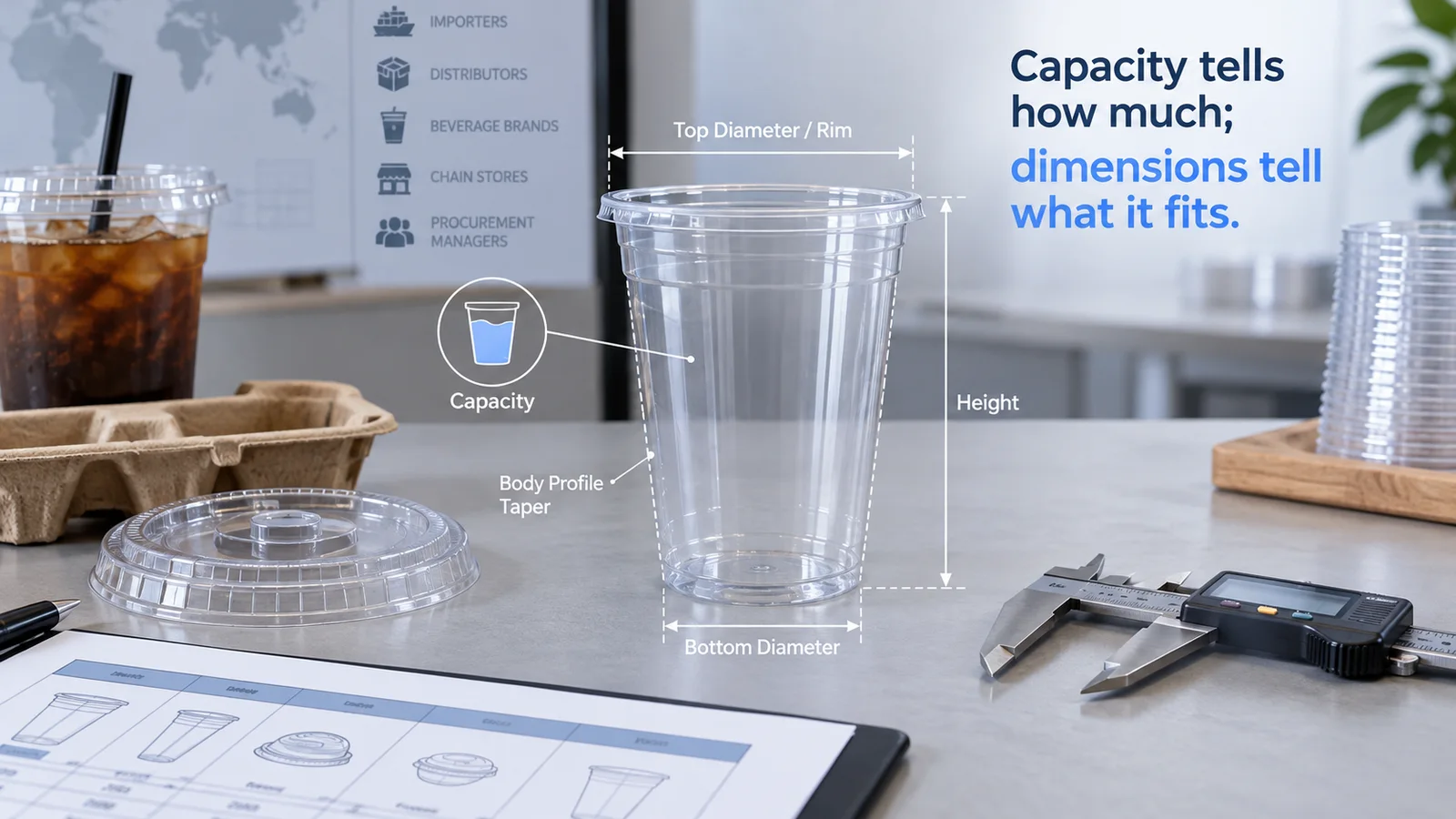
A plastic cup size is not one number. A buyer may start with 12 oz, 16 oz or 24 oz, but nominal capacity alone does not define the product. Two cups sold under the same size name can have different top diameters, bottom diameters, heights, body profiles and lid systems. For purchasing, capacity answers “how much can it hold?” while physical dimensions answer “what does it fit?” Bioleader Cups recommends approving the exact SKU specification, matching lid and physical sample rather than ordering from the ounce label alone.
Quick Rule: Capacity Is Not the Complete Cup Specification
Use capacity to shortlist the serving size; use dimensions to approve the system. The top/rim diameter affects closure selection, bottom diameter affects holders and carriers, height and taper affect handling and equipment, and the exact cup geometry also matters for printing and repeat orders.
What Plastic Cup Dimensions Actually Mean
A useful plastic cup specification normally combines several pieces of information: commercial capacity, top or rim diameter, bottom diameter, overall height, body profile and the matching lid series. None of these should be read in isolation.
Nominal size is a commercial label. It helps buyers compare a general serving class, but it does not guarantee one fixed physical design. A 12 oz cup can be taller or shorter, narrower or wider, U-shaped or conventionally tapered. If one of those designs changes, the matching lid, dispenser fit, carrier fit or artwork may change with it.
That is why the PET cup size guide and PLA cup size guide treat capacity and dimensions as separate checks. The practical rule is simple: measure and approve the exact SKU, not the size name.
Capacity: oz and mL Tell You How Much, Not What Fits
Buyers often mix mathematical fluid-ounce conversion with commercial disposable-cup capacity. They are related, but they are not the same reference. One US fluid ounce equals about 29.5735 mL, so mathematical conversion is useful for unit understanding. Commercial cup labels, however, are product specifications and can follow established market size conventions.
| Nominal size | Exact US fl oz conversion | Typical commercial cup reference | Buyer should use for purchasing |
|---|---|---|---|
| 8 oz | ≈ 237 mL | ≈ 230–250 mL | Supplier's exact SKU capacity |
| 10 oz | ≈ 296 mL | ≈ 300 mL | Supplier's exact SKU capacity |
| 12 oz | ≈ 355 mL | ≈ 350–360 mL | Supplier's exact SKU capacity |
| 16 oz | ≈ 473 mL | ≈ 480–500 mL | Supplier's exact SKU capacity |
| 20 oz | ≈ 591 mL | ≈ 600 mL | Supplier's exact SKU capacity |
| 24 oz | ≈ 710 mL | ≈ 750 mL | Supplier's exact SKU capacity |
| 32 oz | ≈ 946 mL | ≈ 950–1000 mL | Supplier's exact SKU capacity |
Use mathematical conversion for unit understanding; use the supplier's commercial cup capacity and exact SKU specification for purchasing. For example, a buyer can compare a 12 oz PET cup family with a 16 oz PET cup family, but the final choice still depends on the actual drink, ice, toppings and required headspace.
Same Nominal Size, Different Height, Bottom Diameter and Shape
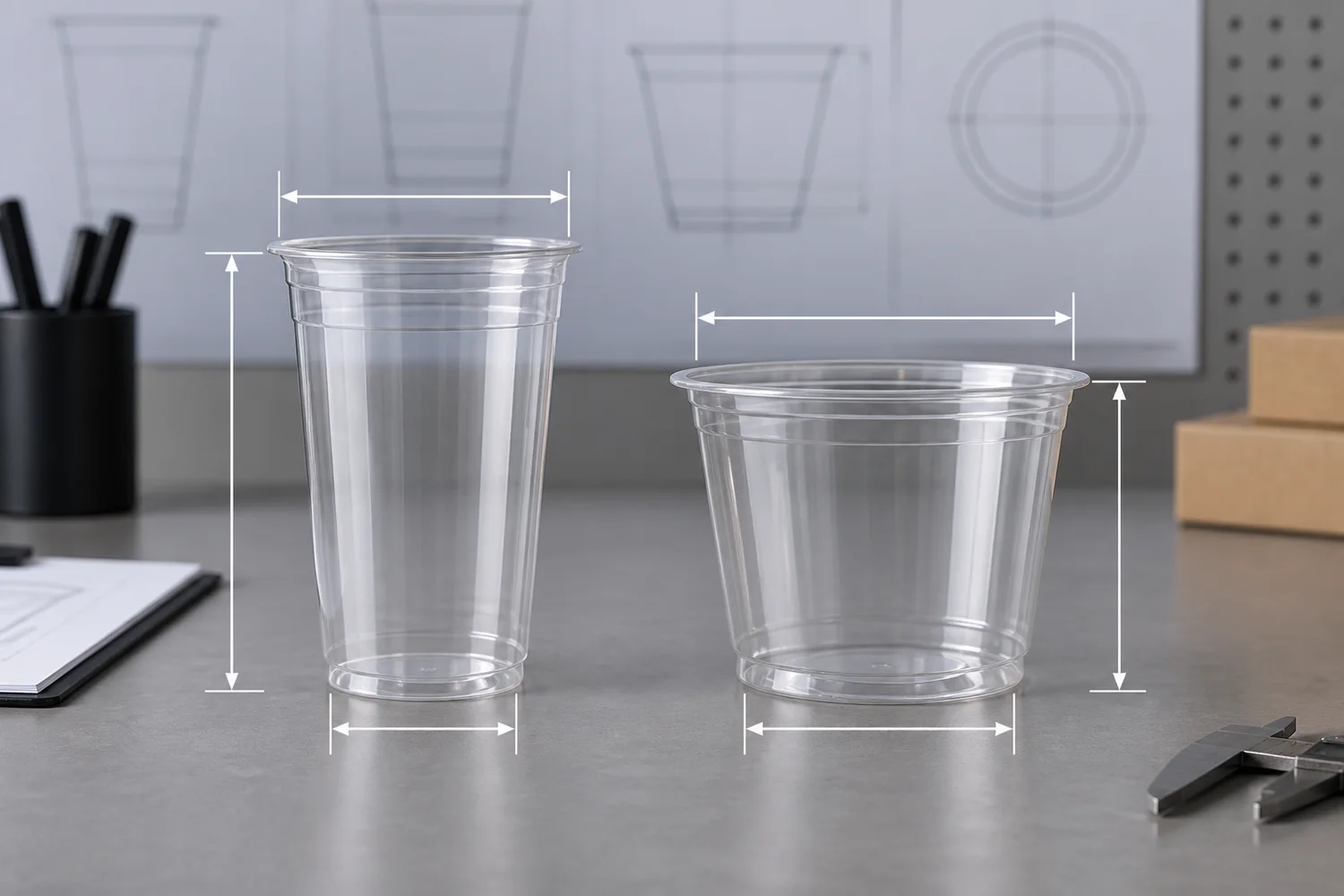
Cup geometry determines how volume is distributed. A taller cup can use a narrower body; a shorter cup can use a wider body. A U-shaped profile can place more visual weight in the lower part of the cup than a regular tapered profile. That means height alone does not tell the buyer which cup is larger, and bottom diameter alone does not tell the buyer whether the cup is stable in every application.
The 24 oz PET cup family is a useful example of why product pages should be read as families rather than one fixed shape. The buyer should compare the exact profile, rim and dimensions that match the intended beverage and closure system.
Regular Tapered Cups
A conventional tapered cup is often easy to understand as part of a multi-size cold-drink range. The taper affects nesting, hand feel, carrier contact and the printable body area. Changing to another tapered SKU with the same nominal capacity can still reopen lid and equipment checks.
U-Shaped Cups
U-shaped cups create a different body curve and visual proportion. The same logo can sit differently on that surface, and the lower-body geometry can change how the cup behaves in a carrier or dispenser. The right question is not whether U-shaped is “better,” but whether that exact profile works with the brand, lid and store setup.
Top Diameter and Rim Size Control Lid Selection
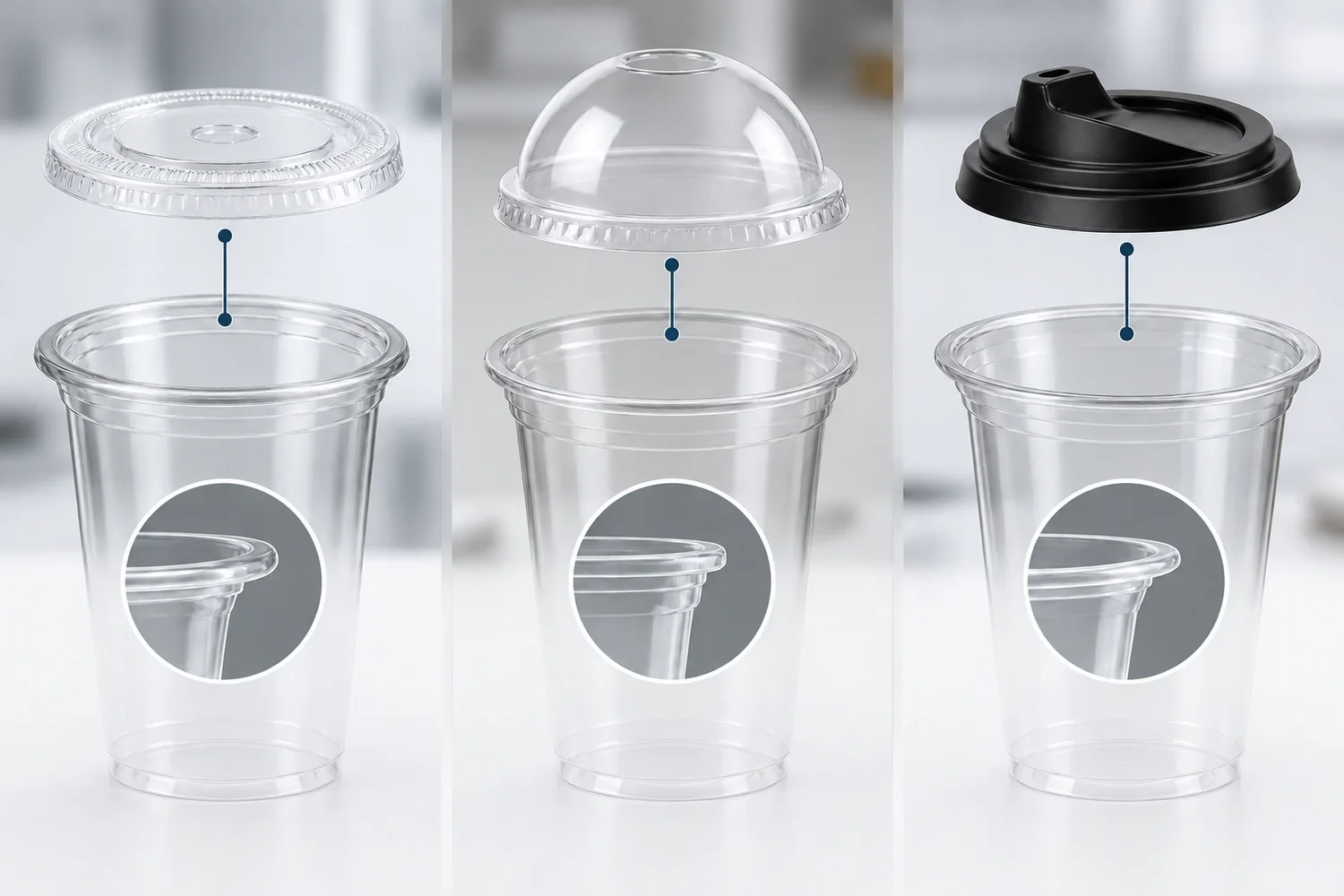
Top diameter is one of the first dimensions buyers should check because it is part of the cup-and-lid interface. In current cold-cup ranges, 90 mm, 95 mm and 98 mm are common candidate rim families, but a nominal cup size does not automatically tell you which rim it uses.
A purchase request for “12 oz lids” or “16 oz lids” is incomplete. The safer request identifies the exact cup SKU and the intended lid series. Even when two products are both described as 98 mm, the buyer should not assume that every 98 mm lid fits every 98 mm cup. Rim geometry, lid structure, material and supplier compatibility data still matter.
The cup and lid compatibility guide covers this approval step in detail. In practice, the rim number narrows the search; the exact cup-and-lid combination closes it.
Common Ordering Error: “Send Me a Lid for a 16 oz Cup”
Capacity is not a lid specification. If the buyer orders lids by ounce size without locking the cup rim and lid series, the result can be a closure that does not seat correctly or does not match the intended drinking format. Correct the RFQ by naming the exact cup SKU, rim family and required lid style.
Which Dimensions Matter by Application?
Dimensions become useful when they are connected to the application. A cup selected for a beverage shop may need to fit a snap lid, cup holder, two-cup carrier, in-counter dispenser or sealing machine. Different dimensions control different interfaces.
| Dimension or feature | What it can affect | Buyer verification |
|---|---|---|
| Top / rim diameter | Flat, dome, sip or straw-lid selection | Exact lid series + physical fit sample |
| Bottom diameter | Carrier, cup holder and lower-body support | Test the filled cup in the actual carrier or holder |
| Height | Storage, dispenser clearance, carton and visual proportion | Check the exact equipment and packing space |
| Taper / body profile | Nesting, dispenser feeding, hand feel and artwork geometry | Approve the physical cup family |
| Rim / flange geometry | Snap-lid fit or film-sealing interface | Validate with the intended lid or sealing equipment |
A cup that fits a carrier when empty can behave differently when filled. A tall cup can have a higher center of gravity, and a U-shaped body can contact a carrier differently from a regular taper. If the store uses a fixed dispenser or sealing machine, include that equipment in sample approval rather than relying on the diameter line in a spreadsheet.
This is also why the broader cold drink shop cup-system guide treats dimensions as operating interfaces, not just product measurements.
How to Read and Approve a Plastic Cup Specification
A buyer should be able to move from a product page or quotation to a repeatable order standard. The sequence below is more reliable than choosing a cup from the nominal size alone.
- Identify the exact SKU. Do not approve “16 oz clear cup” as the complete product description.
- Separate commercial capacity from physical dimensions. Confirm the capacity, top/rim diameter, bottom diameter and height.
- Check the body profile. Record whether the cup is regular tapered, U-shaped or another geometry relevant to the application.
- Confirm the matching lid. Use the supplier's lid series and a physical cup-and-lid sample.
- Check store or customer interfaces. Test holders, carriers, dispensers or sealing equipment where relevant.
- Freeze the approved specification. Use the same SKU, dimensions, lid and packing reference on the PO and repeat orders.
For PLA programs, the 20 oz PLA cup family is another reminder that material and nominal size do not replace exact-SKU review. A buyer still needs the selected dimensions and lid relationship before treating the product as approved.
Buyer Checklist
- Record the exact cup SKU, not only the nominal oz or mL size.
- Confirm the supplier's commercial capacity for that SKU.
- Record top/rim diameter, bottom diameter and overall height.
- Identify the body profile: regular tapered, U-shaped or another verified format.
- Confirm the exact matching lid series with a physical sample.
- Test the filled cup in any relevant carrier, holder, dispenser or sealing machine.
- Recheck artwork or print layout if the cup geometry changes.
- Freeze the cup, lid, dimensions and packing reference for the bulk PO and repeat orders.
Final Recommendation
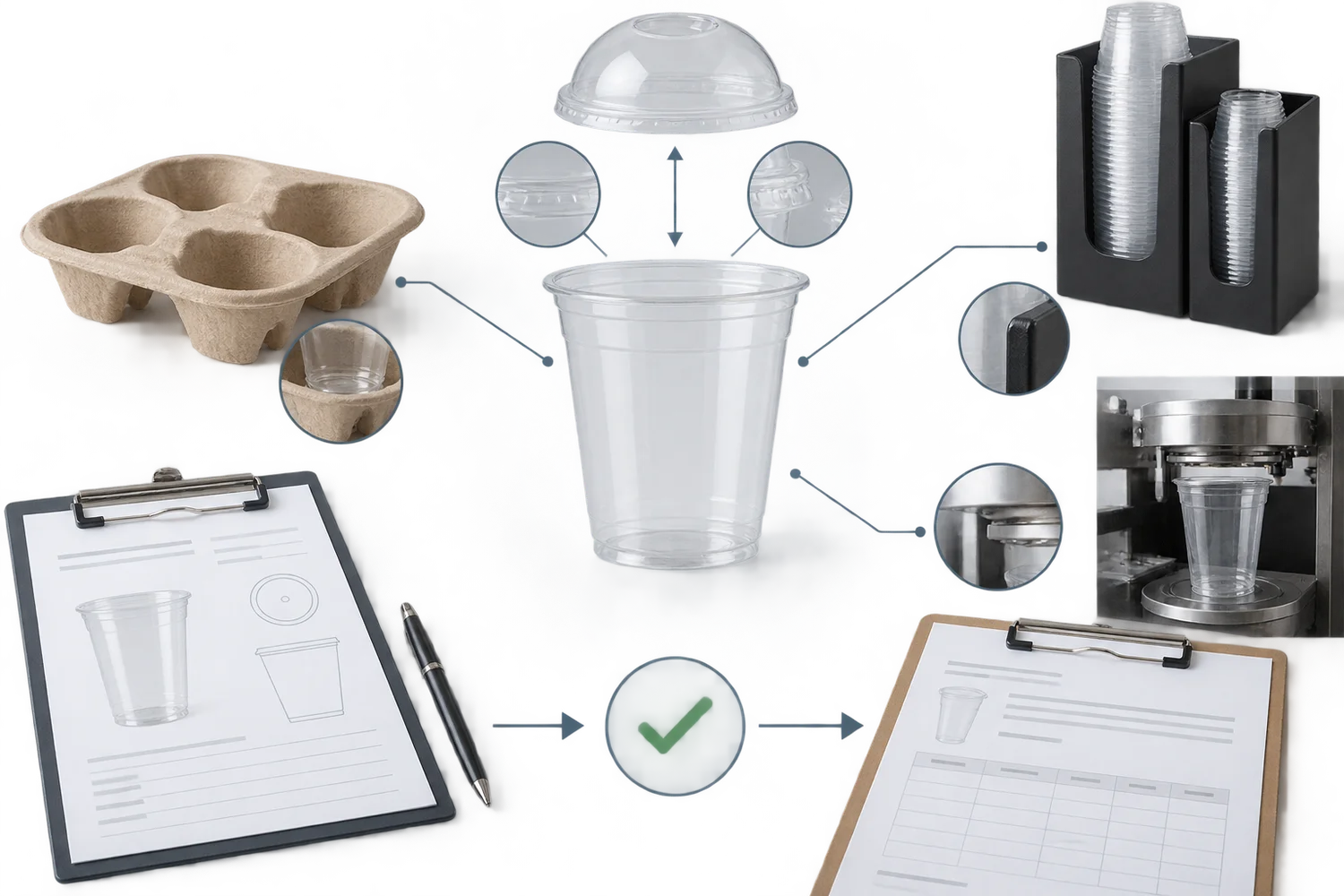
Do not purchase plastic cups by ounce size alone. Use capacity to shortlist the serving class, then use top diameter, bottom diameter, height and body profile to verify the exact product system. Confirm the rim with the intended lid and test the physical cup in any carrier, dispenser, holder or sealing equipment that matters to the application.
Before bulk ordering, approve the exact SKU and keep that specification tied to the lid, packing and repeat-order record. The correct cup is not the cup with the “right ounce number”; it is the cup whose dimensions work with the drink, lid, equipment and operating system.
Frequently Asked Questions
What dimensions should I check when buying plastic cups?
Check the exact commercial capacity, top or rim diameter, bottom diameter, overall height and body profile. Then confirm the matching lid series. If the cup must fit a carrier, dispenser, holder or sealing machine, test that interface with a physical sample.
Does a 16 oz plastic cup always have the same dimensions?
No. Different 16 oz cup SKUs can use different heights, top diameters, bottom diameters, tapers, profiles and lid systems. Treat 16 oz as a nominal size label and use the exact SKU specification for purchasing.
Is top diameter the same as lid size?
Top or rim diameter is a key lid-selection reference, but the number alone does not prove compatibility. Rim geometry, lid structure, material and the supplier's approved cup-and-lid relationship still need to be confirmed.
Why do two cups with the same capacity have different heights?
Volume can be distributed through different top diameters, bottom diameters, tapers and body profiles. One cup may be taller and narrower while another is shorter and wider, even when both are sold in the same nominal size class.
How do I know which lid fits a plastic cup?
Start with the exact cup SKU and supplier-specified rim or lid series, then verify the actual cup-and-lid fit with physical samples. Do not order lids only from the cup's ounce size or a diameter number copied from another product family.