Quick Summary
- Clear PLA cups can serve cold coffee, juice, smoothies, bubble tea, desserts, fruit and salads, but no single cup format suits all ten applications. Select by finished portion, opening, closure and handling conditions; approve the exact SKU and filled sample before bulk ordering.
PLA clear cups are used for more than iced coffee. Depending on the finished design, they can package juice, smoothies, bubble tea, yogurt, small desserts, fresh fruit and cold salads. The useful purchasing question is not simply whether a food is cold. It is which cup shape, opening, capacity and closure will work with that food and the way it is served.
A tall cup that displays a layered drink may be awkward for spoon-served yogurt. A wide-mouth container that makes a salad easy to fill may be the wrong choice for a straw-based beverage. Clear PLA packaging also has handling and heat-exposure limitations that must be considered before ordering for multiple stores or export markets.
Quick selection rule: define the finished portion and service method first; shortlist the cup format and closure second; approve the actual filled cup, documents and logistics conditions before a bulk commitment. PLA material identity alone does not approve an application.
What Are the Most Common Commercial Applications of PLA Cups?
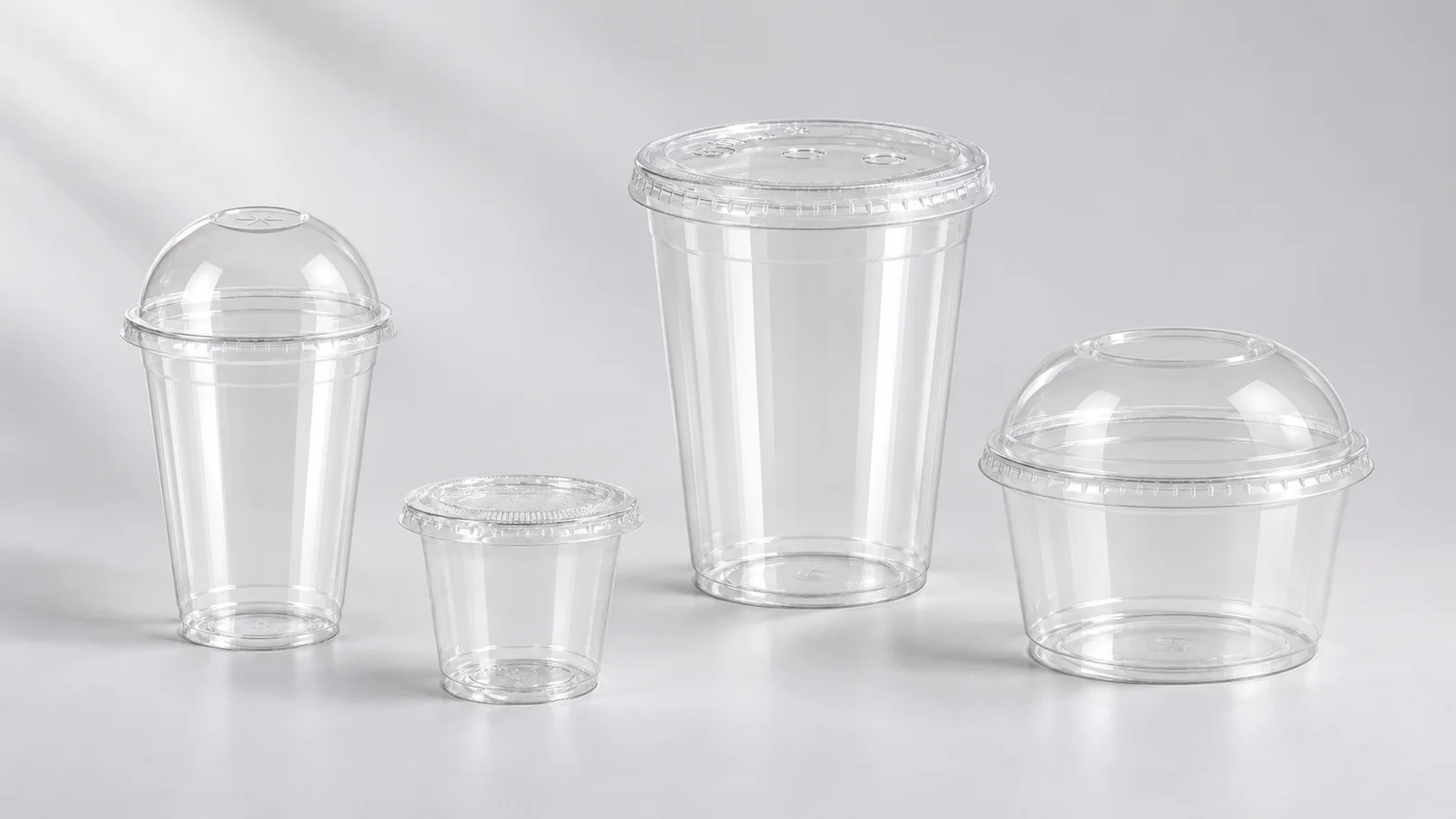
Ten applications account for many of the decisions a foodservice buyer has to make when evaluating clear PLA packaging. They do not require ten unique polymers or ten completely separate cup ranges. The same nominal capacity may be offered in different body and rim formats, and one cup range may be suitable for several foods once its closure and use conditions are confirmed.
| Commercial application | Format to evaluate | Main buyer question |
|---|---|---|
| Iced coffee and cold brew | Tall clear cold cup | How much space remains after adding ice? |
| Fresh juice and fruit drinks | Standard clear cup | Is the working fill volume correct? |
| Smoothies | Large cup, possibly dome lid | Will toppings and the drinking opening fit? |
| Bubble tea | Large clear cup | Can toppings, straw and closure work together? |
| Cold tea and lemonade | Standard or large cup | Do ice and fruit pieces block drinking access? |
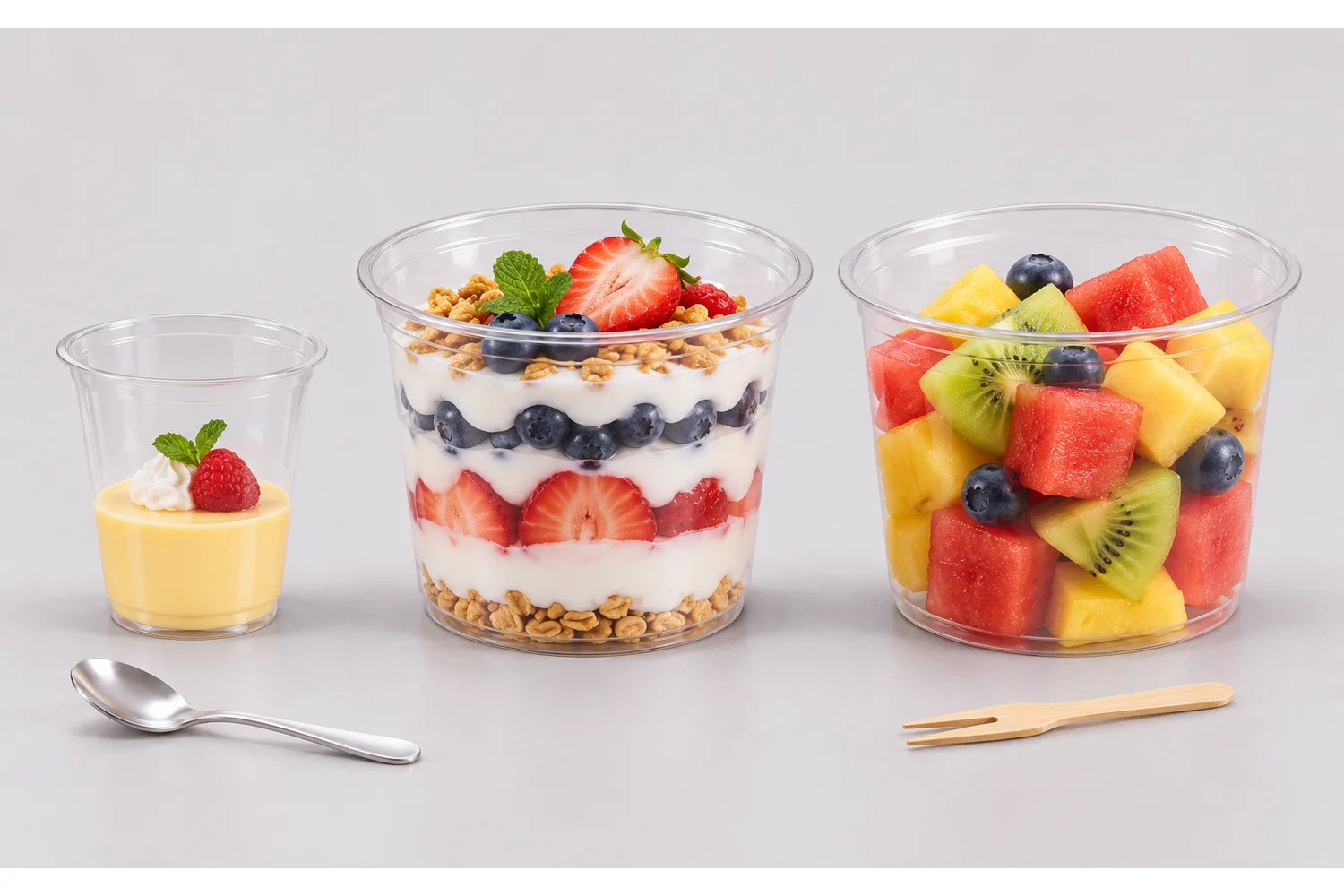
| Yogurt parfaits | Small or wide-mouth dessert cup | Can the customer reach the bottom with a spoon? |
| Pudding and mousse | Small dessert cup | Does the portion fit without crushing the topping? |
| Fresh fruit portions | Wide-mouth clear container | Can fruit be filled and removed without damage? |
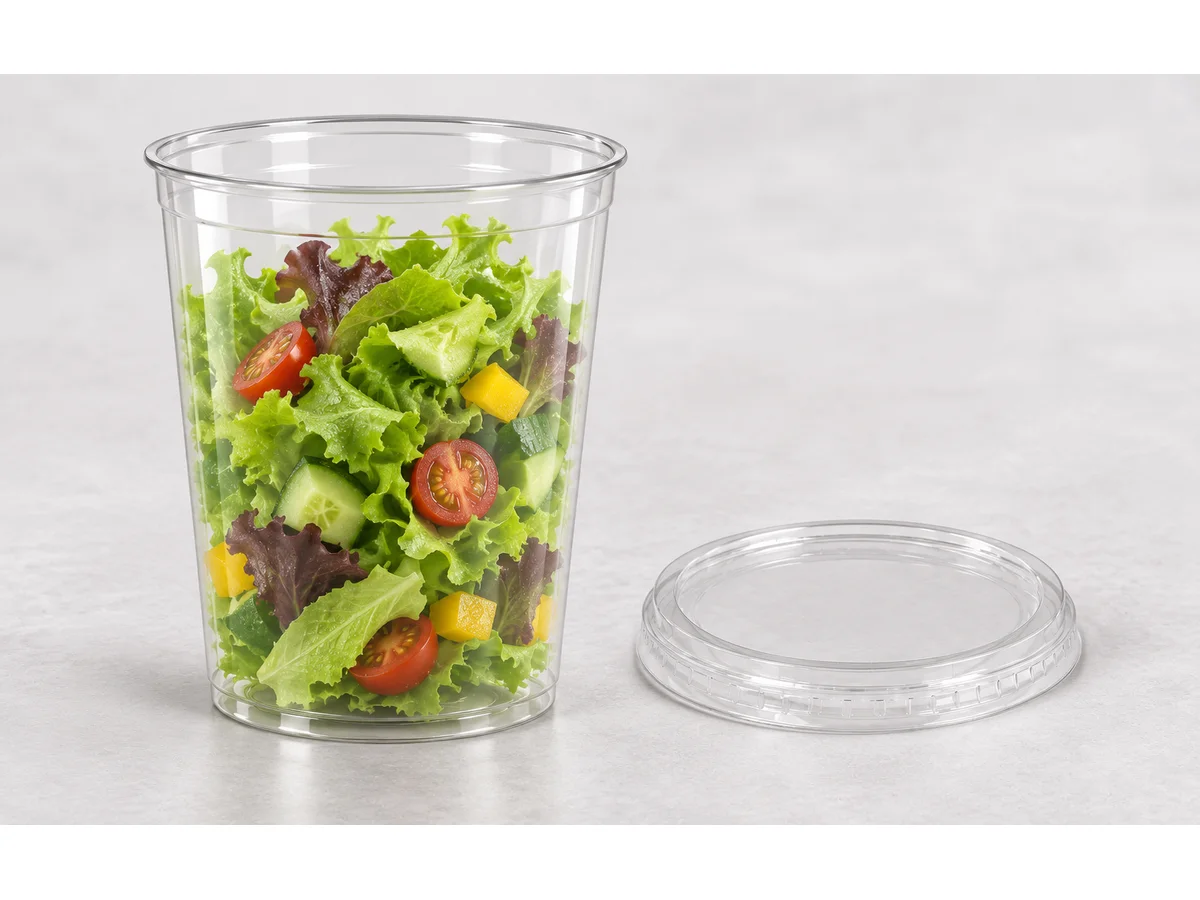
| Cold salads and poke | Wide-mouth bowl-style container | Will the portion, lid and transport routine work? |
| Sampling and events | Small tasting or portion cup | Is the cup practical for rapid service and collection? |
This overview is a format shortlist, not a cup-and-lid compatibility chart. Buyers can begin with the clear PLA cup category, then request the exact variant rather than ordering from an application name alone.
Ten Commercial PLA Cup Applications: What Buyers Need to Check
1. PLA Cups for Iced Coffee and Cold Brew
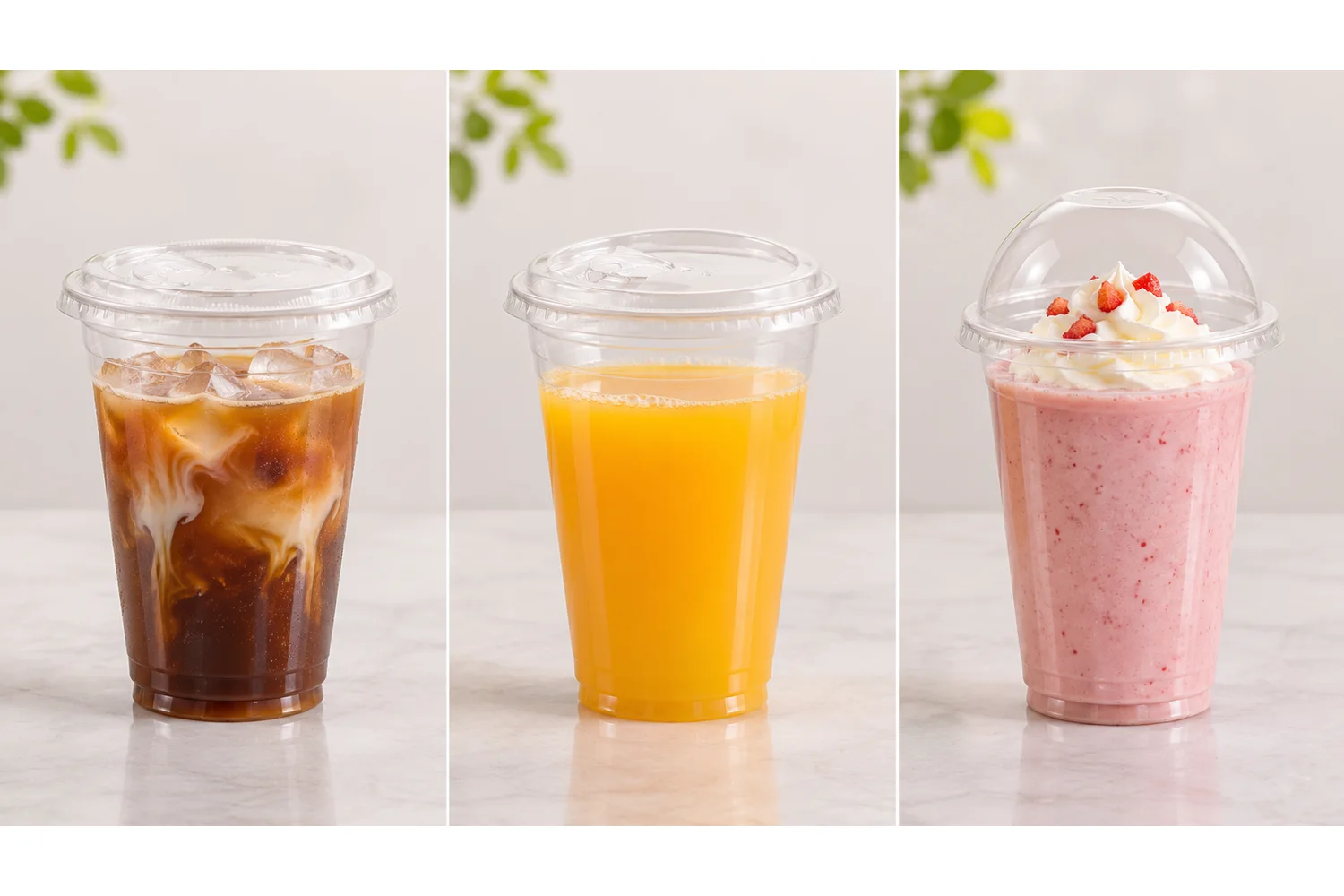
For iced Americano, cold brew and iced latte programs, a transparent cup displays the finished beverage and makes an ice-filled portion easy to identify at the counter. That visibility is useful, but it does not establish the right size. Ice displaces liquid, and a menu described as one beverage size may require a different total cup capacity depending on the recipe and fill line.
Start with the finished drink: liquid amount, typical ice portion, any foam or cold topping, and how the customer drinks it. A flat lid with an opening, a sip-style lid and a dome lid serve different functions. Test the selected closure on the exact rim with a cold, filled sample, including gripping and tilting. The 12oz PLA cup range is one candidate for specification review, not a universal iced-coffee recommendation.
Buyer decision: approve the beverage's working fill line and lid access together. Do not use a standard clear PLA cold cup for hot coffee filling unless that exact finished product has a separate documented approval.
2. PLA Cups for Fresh Juice and Fruit Drinks
A juice bar selling freshly extracted juice has a different operating problem from a café selling drinks over ice. If the advertised portion is a fixed quantity of juice, the buyer must establish the fill volume the staff can serve consistently, leaving sufficient space for the chosen closure and handling routine. Pulp, floating pieces and condensation may change how the package behaves in use.
For a chilled juice sold through a display cabinet, check the appearance of a filled cup after its intended display period. For takeaway, examine how the cup is picked up, whether the lid seats fully and whether liquid escapes around the opening during ordinary handling. Comparing empty cup silhouettes alone misses these questions. The most useful sample is the actual juice recipe in the proposed cup and lid.
Buyer decision: specify usable fill volume and a practical closing method before finalizing nominal capacity or printed artwork.
3. PLA Cups for Smoothies and Blended Beverages
Blended beverages raise two separate clearance questions: how easily the drink passes through the selected straw or drinking opening, and whether any whipped cream, fruit or other topping needs space above the rim. A dome lid can create room for toppings, but the dome's shape and opening must fit the actual beverage and cup combination.
Large formats in the 16oz PLA cup series may be useful starting points for a menu review. The final choice still depends on the drink recipe, serving size and approved lid. Prepare a filled sample at the intended serving level, close it with the actual lid, and assess straw clearance, grip and transport. A larger cup does not correct a lid that interferes with a topping.
Buyer decision: define the filled drink height and topping height separately; then approve the cup, dome or flat lid, and drinking access as one package.
4. PLA Cups for Bubble Tea and Milk Tea
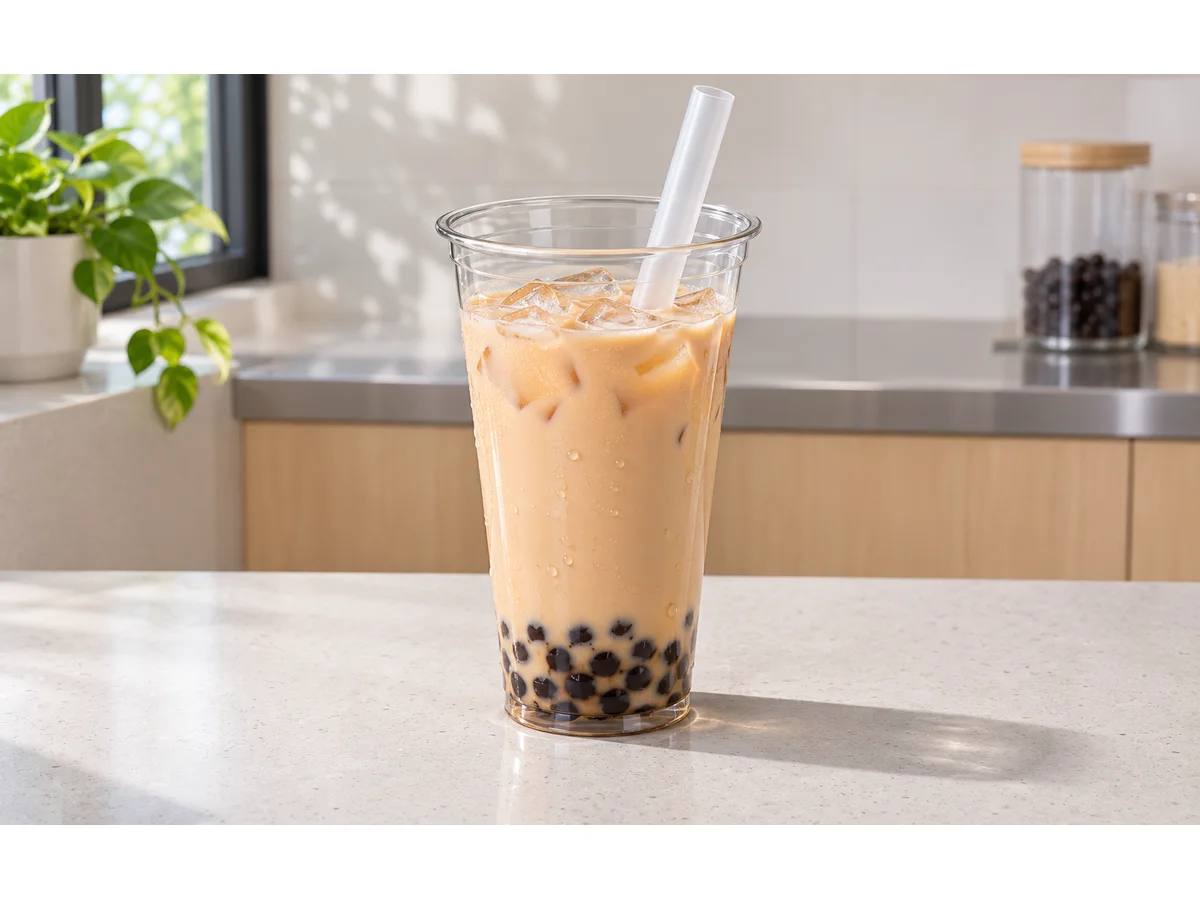
Bubble tea is not simply a large cold drink. Tapioca pearls, jelly and other inclusions affect the drinking opening, the remaining beverage space and the amount of agitation during handling. A large straw may be necessary for the recipe, but a lid with a small straw opening cannot be assumed to support it.
Where a shop uses a snap-on lid, evaluate the exact rim and closure with the chosen straw. Where it uses sealing film, involve the machine and film suppliers: the cup's sealing surface, holder, film and operating setup must be approved together. A cup offered with a matching dome lid is not automatically approved for heat sealing. The 20oz PLA cup range can be shortlisted for larger drinks, subject to confirmation of the selected rim variant.
Buyer decision: confirm topping volume, straw diameter and closure route before choosing the SKU. Do not infer sealing compatibility from a nominal 90mm, 95mm or 98mm diameter.
5. PLA Cups for Cold Tea, Lemonade and Fruit Infusions
Cold tea and lemonade often contain less viscous liquid than a smoothie, but fruit slices, mint, ice and other additions can create different problems at the opening. A lid that works for plain iced tea may be inconvenient when lemon slices settle near a drinking port. Very large fruit pieces may also make a straw-only service awkward.
Test the intended menu presentation rather than assuming every fruit drink belongs in the same cup. The serving staff should be able to fill the cup without pushing ingredients into the rim; the customer should be able to drink without removing an unsuitable lid. For made-ahead beverages, confirm that the selected cup and closure are suitable for the specified chilled holding and display conditions.
Buyer decision: use the ingredient size and drinking method to choose the opening; use the liquid-plus-ice serving volume to choose capacity.
6. PLA Cups for Yogurt and Layered Parfaits
Yogurt parfaits are sold partly through presentation: the customer sees layers of yogurt, fruit, cereal and toppings. A clear container can serve that purpose, but the opening needs to accommodate a spoon and the product must remain convenient to eat at the bottom. A tall, narrow drink cup may look attractive when filled yet be a poor spoon-serving format.
For small single servings, examine the 4oz PLA dessert cup format. Larger layered desserts may be better candidates for a wide-mouth format. Compare the actual portion weight, layer height, spoon access, lid clearance and chilled-display handling before choosing between them. The material name does not establish a yogurt's safe shelf life.
Buyer decision: approve spoon access and the filled dessert height before choosing a cup because its nominal capacity looks sufficient.
7. PLA Dessert Cups for Pudding, Mousse and Mini Desserts
Pudding and mousse programs often need consistent small portions and a clean presentation of the dessert surface. A low, small-volume cup may work better than a taller drink cup because the customer can reach the product without an unnecessarily deep container. Toppings create a separate issue: a flat lid may touch whipped cream or fruit even when the underlying dessert fits.
There is also a difference between one dessert sold on its own and several small desserts packed together for catering. Review how cups are placed in trays, how staff apply lids, and whether the tops can be protected during delivery. For a printed dessert cup, settle the exact body and print area only after the portion and closure have been approved.
Buyer decision: verify the spoon-served portion and closure clearance using an actual filled sample, not a nominal oz label alone.
8. PLA Clear Containers for Fresh Fruit Portions
A fruit portion has to be filled, displayed and eaten. Those three tasks can favor a wide-mouth container when the food includes grapes, strawberries or cut fruit that should remain easy to remove. A narrow opening can slow filling and make spoon or fork access inconvenient even when the total fruit weight fits inside.
One candidate to compare is the 117mm wide-mouth version within the 24oz PLA range. That product family also contains narrower drink-cup formats, so “24oz PLA cup” is not a sufficient purchasing description. Assess the actual fruit mix, condensation, possible liquid accumulation, closure and chilled display. Packaging selection must not be presented as a guarantee of fruit freshness or microbiological safety.
Buyer decision: test filling and utensil access with the actual fruit pieces, then verify the exact wide-mouth SKU and its lid.
9. PLA Clear Bowls for Cold Salads and Poke
Salads and poke-style cold meals need room for ingredients that are not easily poured through a narrow cup opening. The buyer should evaluate access for assembly, the space required by leaf vegetables and toppings, and how the lid behaves when the container is carried. A clear bowl-style PLA container can make cold-food presentation visible without using a conventional tall beverage shape.
The 32oz PLA salad bowl container series is a relevant product candidate. It includes more than one bowl profile, so approval should identify the exact configuration and matching closure. A lid that snaps on an empty sample still needs checking with the intended portion. Keep packaging suitability distinct from the food operator's chilling, preparation, shelf-life and hygiene obligations.
Buyer decision: select for actual food volume and opening geometry, then approve the filled bowl, lid retention and cold-chain handling procedure.
10. PLA Cups for Sampling, Catering and Events
Tasting portions are purchased for a service task, not simply because the cup is small. A sample cup must be quick to fill, comfortable to hand over and proportionate to the food or drink being offered. For spoon-served samples, assess opening width and utensil access. For drink tasting, assess the amount needed to evaluate the beverage without creating unnecessary waste.
A 3oz PLA tasting cup is a relevant starting point for an event assortment, while dessert samples may require a different format. Outdoor events introduce another decision: protect clear PLA stock from prolonged heat exposure before service. If an event operator intends to call the used items compostable, confirm the actual product claim, collection arrangement and the receiving facility's acceptance.
Buyer decision: select for portion, distribution speed and the event's real collection system, rather than choosing by a compostability slogan alone.
How to Choose PLA Cup Formats, Sizes and Lids by Application
The ten applications narrow the options, but they do not finalize the order. A reliable shortlist records four separate variables: working fill volume, body and opening geometry, closure function, and the exact cup-and-lid reference. A product family with the same nominal oz value may contain several versions that behave differently in filling or closure.
Standard Cold Cups vs Wide-Mouth Containers
Choose a standard cold-drink profile when the product is served by sipping or through a straw. Evaluate a wider opening when ingredients need to be placed by hand, arranged in visible layers, or reached with a spoon or fork. A bowl-style container may use more shelf space than a tall cup but can make salad or fruit service more practical. Ask for drawings and samples for the candidate body format.
Working Fill Volume Is Not Nominal Capacity
Define the portion as it is actually sold. A drink with ice, tapioca pearls or fruit pieces occupies space differently from a liquid-only serving. For desserts, the upper topping may require space under the lid. Record a realistic fill line in a photograph of the approved sample rather than relying on the commercial capacity printed in a catalog.
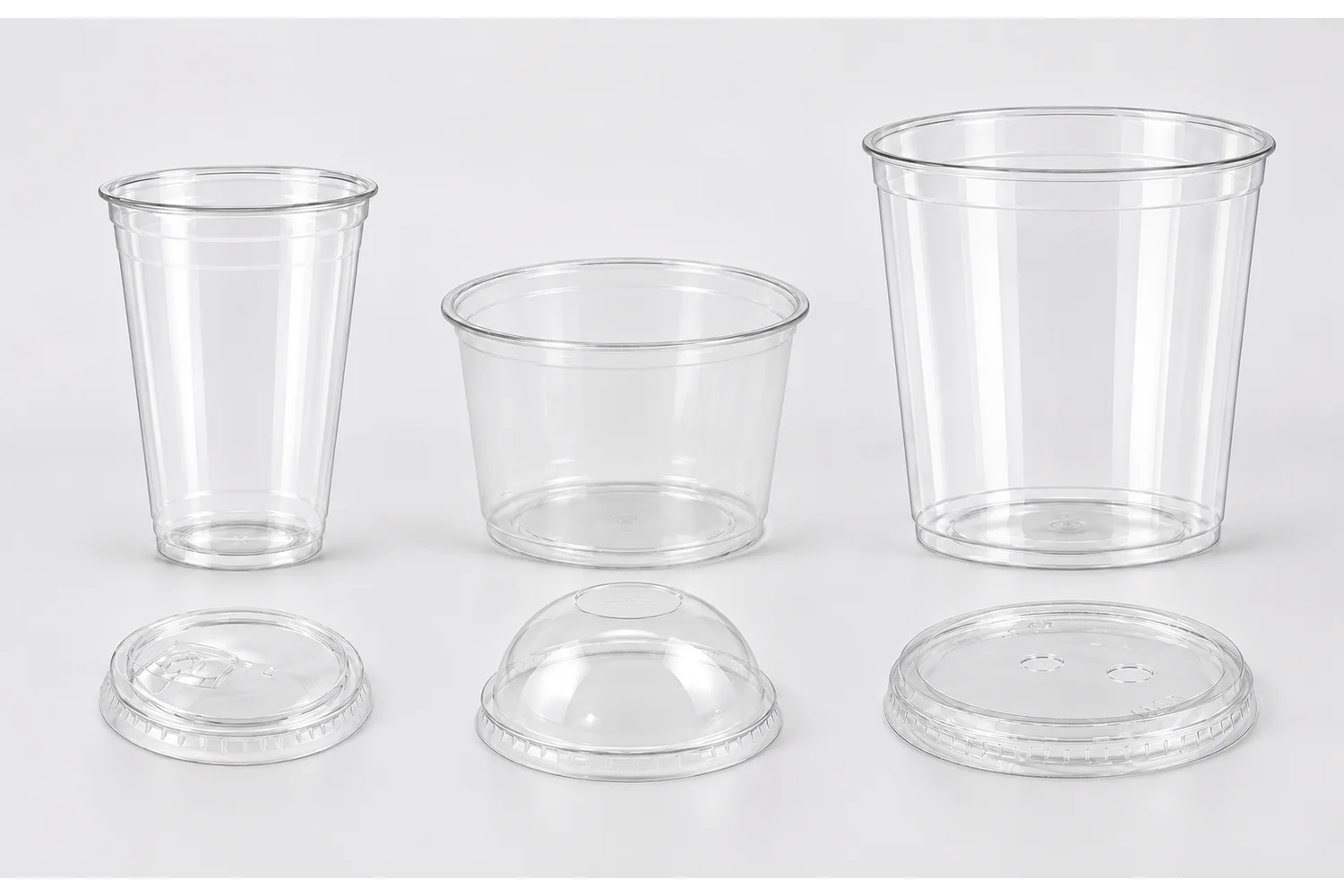
Flat, Dome and Sip Lids Solve Different Problems
Flat lids may suit standard takeaway drinks and closed portions; dome lids may provide room over toppings; sip or straw-opening designs determine how the customer accesses the drink. These are functions, not compatibility guarantees. The PLA cup lid options provide a product-family starting point, while the PLA cup sizes and lid compatibility guide explains why the exact rim and body must be checked.
Sealing Film Needs a Separate Equipment Approval
A snap-on lid and heat-sealed film are different closure systems. Before specifying film for a bubble-tea line, obtain the cup's actual sealing surface information and the machine holder or mold reference. Ask the cup, film and equipment suppliers to agree on a supported combination, then evaluate it on the intended machine. Passing a cold-drink filling test does not approve a heat-sealing operation.
| Format | Typical application | Closure to evaluate | Approval evidence |
|---|---|---|---|
| Standard cold-drink cup | Iced coffee, juice, cold tea | Matching flat or sip lid | Working fill line, rim fit and drinking access |
| Large cold-drink cup | Smoothies, bubble tea | Matching dome, straw lid or separately qualified film | Topping clearance, straw or seal verification |
| Small dessert cup | Pudding, mousse, dessert samples | Matching flat lid, if needed | Portion height and closure clearance |
| Wide-mouth dessert container | Yogurt, fruit, parfaits | Matching flat or dome lid | Spoon access and filled-sample closure |
| Bowl-style cold-food container | Salads, poke-style cold meals | Matching bowl lid | Food volume, rim fit and takeaway handling |
| Tasting or portion cup | Sampling and catered portions | Application-specific | Service speed, portion size and handling |
A nominal rim diameter is a screening variable, not a fit approval. Record the exact cup SKU, rim geometry and matching lid reference. Even two products described with the same diameter may require different closure verification.
Where PLA Cups Fit—and Where They Do Not
Clear PLA is useful for selected cold-service applications, but material choice must still reflect the complete route from production to use and disposal. A compostability objective cannot remove temperature limitations or substitute for finished-product approval.
Standard Clear PLA Cups Are Cold-Use Packaging
Do not assume that a transparent PLA cup is suitable for hot drinks, direct hot filling or microwave use. Even when a material supplier reports a polymer thermal property, that number is not a service-temperature approval for a thin finished cup. Require the exact cup's intended-use and storage instructions. When an operation cannot maintain the specified conditions, reopen the material and packaging choice rather than pushing the same cup into an unsuitable task.
Storage, Export Shipping and Heat Exposure
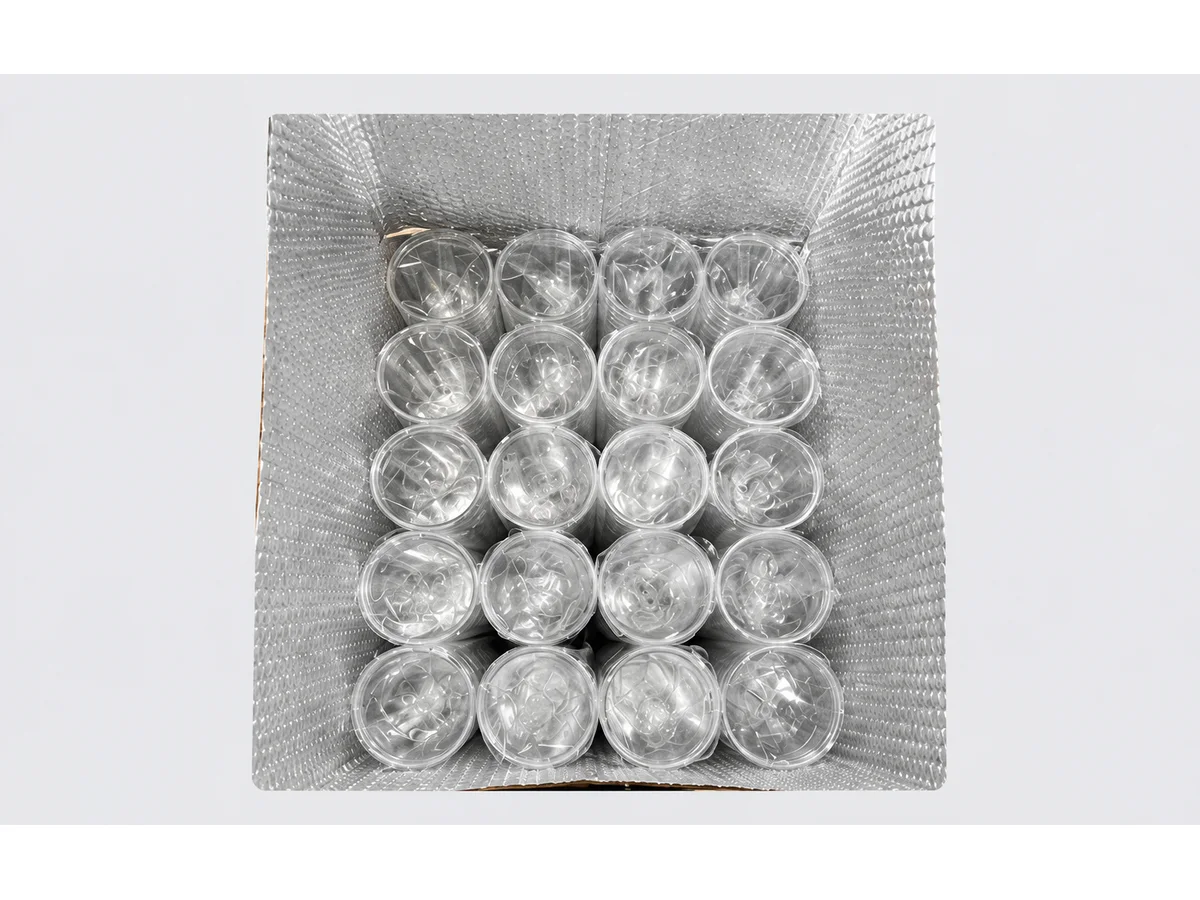
PLA cups can encounter heat before the first drink is filled: loading areas, trucks, freight containers and warehouses may expose packed cups to elevated temperatures. Duration, stacking pressure and cup geometry can affect whether a cup retains its shape. Specify any required handling or thermal protection in the purchasing record and compare the delivered shipment with an approved reference. The detailed PLA storage and heat-deformation guide covers that investigation more fully.
Compostability, Food Contact and Destination-Market Rules
PLA is a plastic, even when made from renewable feedstocks. A claim that an individual finished cup is industrially compostable needs evidence covering the applicable product and claim. Industrial composting is not the same as home composting, and local collection programs may not accept every certified item. Food-contact records must also match the finished cup, intended food use and destination market; resin-level statements should not be treated as finished-SKU documentation.
Destination-market restrictions on single-use plastic foodware may apply to PLA as well as to conventional plastics. Do not infer a regulatory exemption from the words bio-based, biodegradable or compostable. If the proposed market requires a different material or recovery route, the PET versus PLA cup comparison is the more suitable next read.
PLA Cups Within the Wider PLA Applications Market
Clear cold cups are one commercial application of polylactic acid, not a summary of the entire PLA industry. Other uses can involve different resin grades, manufacturing methods and performance requirements. For that wider material and industrial context, read Bioleader's 20 applications of PLA across packaging and other industries. This CupsChina guide stays focused on the finished cold-food and beverage packaging decisions that importers and foodservice buyers need to make.
How to Approve PLA Cups Before a Wholesale Order
A buyer's approval sequence should follow the operational risk. Begin with the food or beverage brief, then narrow the body and closure formats, then confirm physical samples and documents. Reversing the order—choosing the cheapest nominal cup size before the finished menu is known—often leaves the difficult decisions until after artwork, purchase orders or store rollout plans have been prepared.
Define the Finished Application
Document the serving recipe and portion, ice and topping level, filled-product temperature, intended holding and display condition, drinking or eating method, delivery route and destination market. If the product will be offered in several countries, separate the market requirements rather than assuming one document or disposal claim covers them all.
Shortlist the Exact Cup and Closure References
Obtain drawings or product specifications identifying the selected cup variant and matching lids. For any film-sealed program, record the machine, holder and film separately. If a proposed lid is not supported by an exact supplier reference, treat it as a candidate for trial rather than an approved component.
Approve Filled Samples and Printing
Fill candidate cups with the real recipe, not just water, when viscosity, ice, toppings or fruit pieces affect service. Check actual fill line, lid seating, straw or spoon access, grip, ordinary handling and the planned display condition. For branded cups, confirm the final artwork template and print placement after the cup format is fixed. Keep a physical or documented reference for repeat orders. See the plastic cup sample approval guide for the broader sign-off workflow.
Confirm Documents, Packing and Shipment Conditions
Request applicable food-contact and compostability evidence for the proposed finished item, and verify whether the planned market and disposal program accept it. Confirm carton packing, protective measures where needed, order quantity and customization terms from the actual quote. Do not carry a certification, MOQ, lid pairing or delivery promise from one PLA SKU to every other product in the assortment.
| Approval item | What the buyer should retain | What it prevents |
|---|---|---|
| Finished application | Recipe, portion and service brief | Buying a cup for the wrong task |
| Capacity and format | Exact SKU, dimensions and filled sample | Confusing nominal size with usable portion |
| Lid or sealing film | Approved cup-and-closure references | Incompatible lids or unverified sealing |
| Food contact | Finished-product evidence for destination and use | Relying on a broad resin claim |
| Compostability claim | Product-specific proof and local recovery review | Unsupported disposal messaging |
| Printing | Approved template, proof and sample where required | Applying artwork to the wrong cup revision |
| Shipment | Confirmed cartons, route and protection requirements | Uncontrolled handling and heat exposure |
Buyer Checklist: PLA Cup Applications and Sample Approval
- Have we defined the food or drink as it will actually be served, including ice, toppings and utensils?
- Do we have the exact finished cup SKU, body dimensions and working fill volume?
- Is the chosen opening convenient for drinking, spoon access or filling solid food?
- Have the exact cup and lid been physically checked together?
- If sealing film is used, have the machine, holder, film and cup been approved as a system?
- Are the product-specific cold-use, food-contact and destination-market requirements documented?
- Can any industrial-compostability claim be supported for the finished item and local collection route?
- Have filled samples, any printing, packing and shipment conditions been signed off before the bulk order?
Use the answers to narrow the quotation request. A useful supplier brief specifies the actual use case and expected handling conditions, not simply “PLA cup with lid.”
Frequently Asked Questions About PLA Cup Applications
What are PLA cups commonly used for?
Common applications include iced coffee, juice, smoothies, bubble tea, lemonade, yogurt parfaits, pudding, fresh fruit, cold salads and sampling. The right format depends on serving volume, opening geometry, lid function and the approved cold-use conditions of the exact product.
Can PLA cups be used for hot drinks?
Standard clear PLA cold cups should not be assumed suitable for hot drinks, direct hot filling or microwave heating. Request the intended-use specification for the exact finished cup. A general polymer temperature value is not proof that a formed cup can handle a hot beverage.
Are PLA cups suitable for yogurt, fruit and salads?
Selected PLA dessert cups and wide-mouth containers can be candidates for chilled yogurt, fruit and salads. Check actual food volume, spoon or fork access, lid retention and the intended cold holding conditions. Packaging suitability does not establish the food's shelf life.
Which PLA cup sizes and lids work for smoothies and bubble tea?
Large clear-cup ranges are common starting points, but the final size depends on the filled drink, ice, toppings and drinking method. Confirm dome clearance, straw access and lid fit for the exact SKU. Bubble tea using sealing film also needs cup, film and machine compatibility approval.
What should buyers verify before ordering PLA cups wholesale?
Verify the exact cup and lid references, working fill volume, filled-sample performance, applicable food-contact and compostability evidence, printing requirements, carton packing, heat-exposure controls, destination-market conditions and quotation terms before approving a bulk order.
Final Recommendation: Select PLA Packaging by the Service Task
For standard iced drinks, start with a cold cup that matches the recipe's working fill volume and drinking method. For smoothies and bubble tea, check toppings, straw access and closure conditions. For desserts, fresh fruit and cold salads, prioritize the opening and the way the customer eats the food. Each shortlist still needs an exact cup-and-lid sign-off.
The critical limitation: PLA material identity does not guarantee hot-use performance, lid interchangeability, food-contact compliance or local composting acceptance. If the service and supply chain cannot support the selected PLA cup, reconsider the format or material before purchasing.
To review an actual sourcing project, send CupsChina the food or drink application, target portion, preferred cup shape, closure requirement, destination market, expected quantity and any custom-printing needs through the packaging inquiry page. The next useful step is an exact-SKU shortlist and sample plan—not a generic claim that one PLA cup fits every application.