
Quick Summary
- A B2B guide to choosing plastic cup lids by drinking method, top clearance, rim diameter, exact cup compatibility, delivery handling and store use, including flat, dome, sip, straw-opening and sealing-film systems.
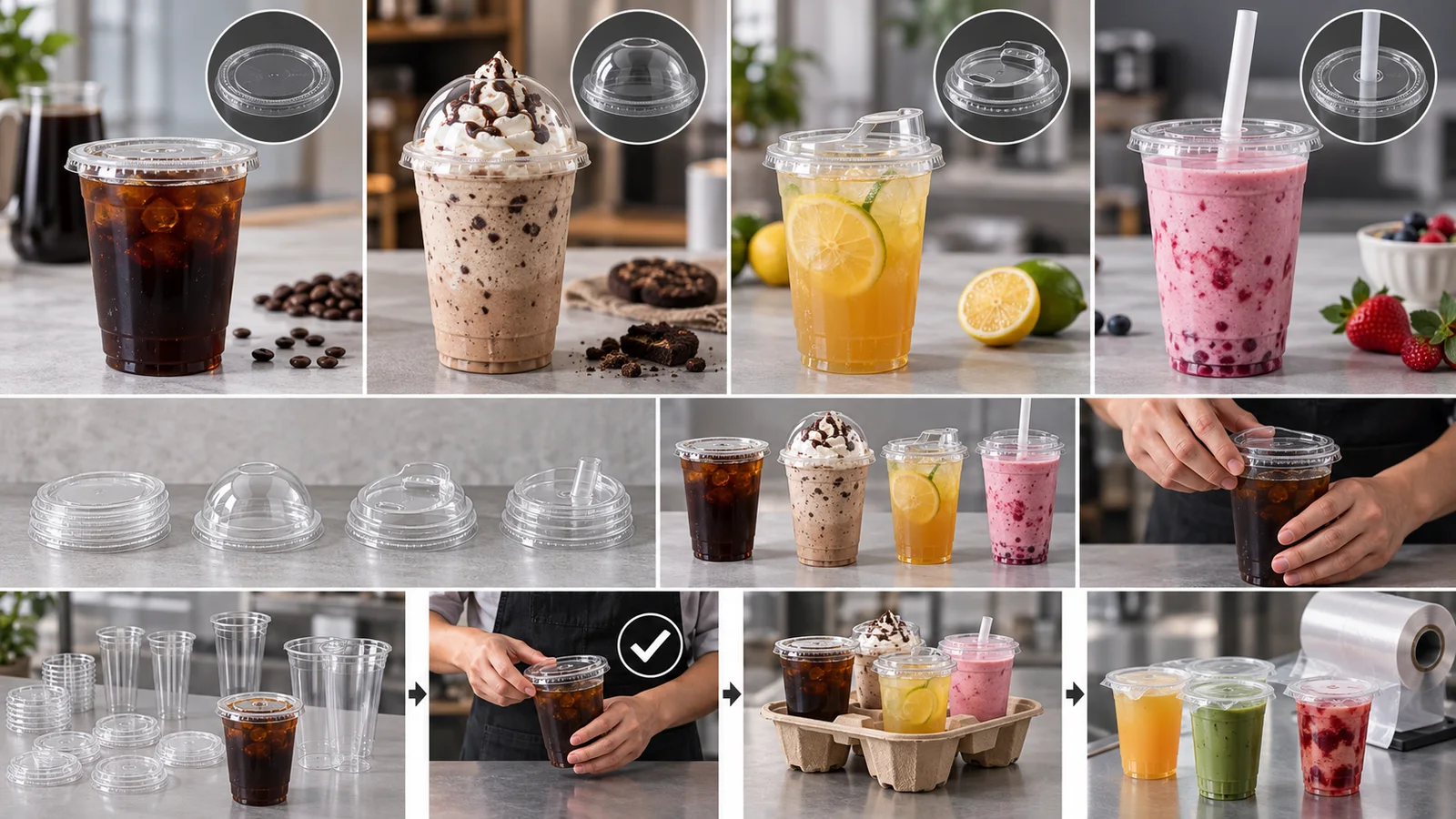
Choose a plastic cup lid by what the drink needs to do, then verify the rim and exact cup fit. Flat lids suit many cold drinks that stay below the rim. Dome lids create space for cream, foam or toppings. Direct-drink lids support sipping, while straw-opening lids are selected around the intended access. These functions do not prove compatibility. A 98 mm label narrows the search, but it does not mean every 98 mm lid fits every 98 mm cup. For B2B approval, lid function, rim family, exact cup SKU, physical fit and store handling have to work as one system.
Quick Lid Selection Rule
Start with function, narrow by rim, approve the exact fit. Decide first whether the drink needs normal top coverage, extra clearance, direct sipping, straw access or a film-sealed closure. Then identify the cup's rim family and supplier lid series. Final approval belongs to the actual cup-and-lid combination under the intended use conditions.
Start With How the Customer Drinks
A lid is part of the service design, not an accessory to choose after the cup. The same cold cup can require a different closure when the drink changes from plain iced tea to cream-top coffee, fruit tea or a straw-served beverage with solids.
| Closure option | Primary function | Extra top clearance | Takeaway consideration | Buyer must verify |
|---|---|---|---|---|
| Flat lid | Standard cold-drink closure | No | Keeps finished package relatively low | Exact rim, opening design and physical fit |
| Dome lid | Space above the cup rim | Yes | Raises finished package height | Topping clearance, carrier/bag fit and lid retention |
| Direct-drink / sip lid | Sipping without a separate straw | Usually no | Drinking opening may remain exposed during transport | Beverage flow, ice, closure feature and cup fit |
| Straw-opening lid | Straw access | Usually no | Opening and straw must suit the drink | Actual straw, toppings, rim and lid structure |
| Sealing film | Film-sealed closure system | No dome clearance | Depends on validated film and machine process | Cup, sealing surface, film, holder/mold and settings |
Bioleader Cups separates two questions during lid planning: What drinking function is required, and what exact cup-and-lid combination is approved? A request for a wider straw opening, for example, defines access. It does not identify the lid code or prove that the selected lid fits the cup.
Flat Lids for Standard Cold-Drink Service
Flat lids are the first option to evaluate when the finished drink stays below the rim and does not need additional vertical space. They are relevant to many iced teas, juices, lemonades and standard iced coffees, but “flat lid” is still a broad description rather than a complete purchasing specification.
One flat lid may have a straw opening; another may use a different drinking interface. The buyer needs the exact lid series, rim family and intended cup rather than a product photo alone. A smaller cup family such as the 10 oz PET cup range may be useful for a compact cold-drink format, but the 10 oz label does not identify the lid.
Flat lids also keep the finished package close to the cup's original height. That can help when shelf clearance, carriers or takeaway bags are already fixed. It does not make every flat lid delivery-secure: the opening design, lid retention and actual filled-cup handling still need approval.
Dome Lids When the Drink Needs Space Above the Rim
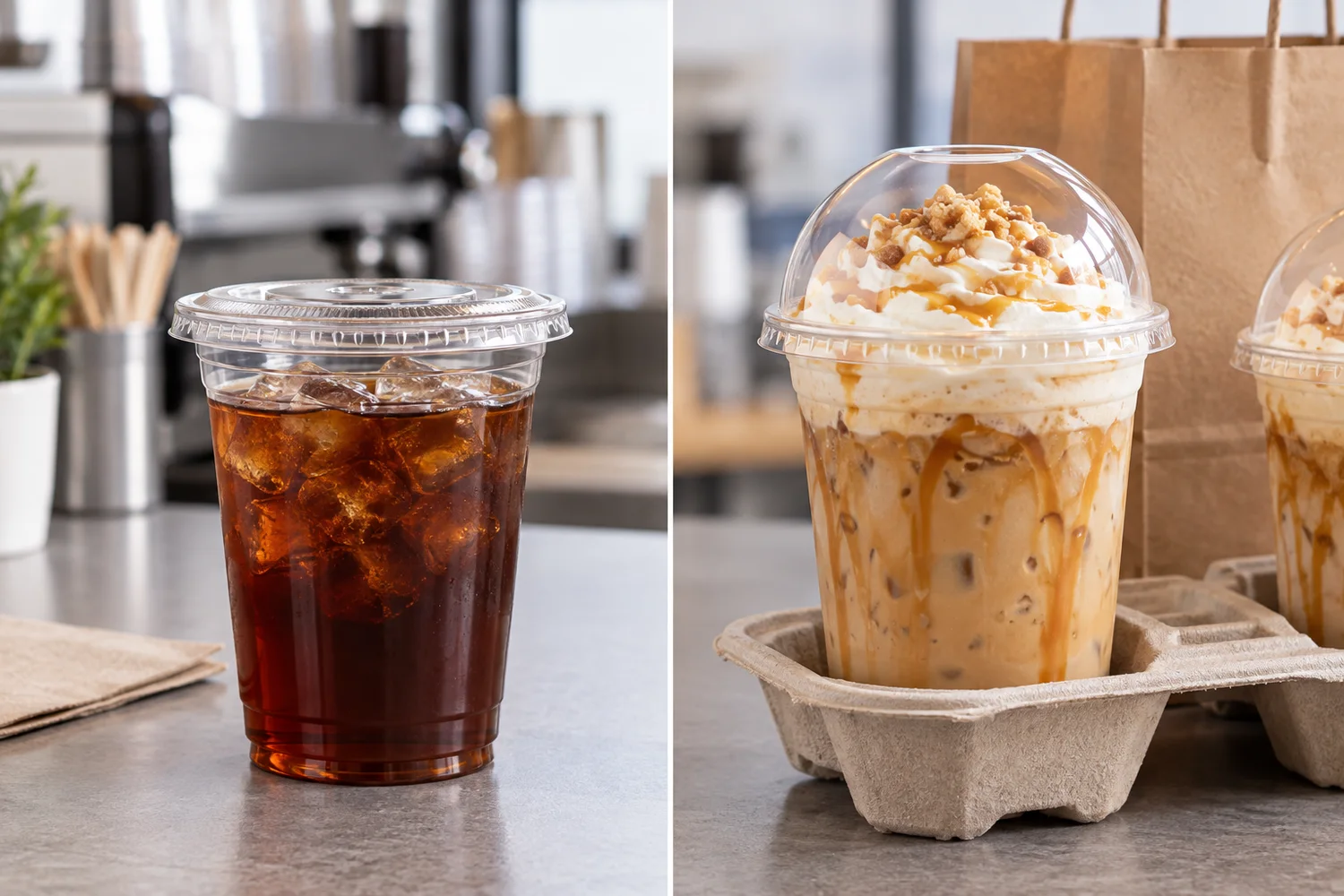
A dome lid solves a geometry problem: it creates usable space above the cup rim. Whipped topping, cream tops, fruit presentation and dessert-style drinks can all create that requirement. Dome selection should therefore begin with the actual finished drink, not with a preference for a taller-looking package.
The tradeoff is the completed package height. A dome that clears the topping at the counter can make the cup too tall for an existing takeaway bag, shelf or carrier arrangement. Review the real topping level and finished package before approving the lid.
The 24 oz PET cup range is a useful large-format product family to review, but a larger cup does not automatically need a dome. Capacity and lid function are separate decisions. Use the drink to decide whether top clearance is required, then use the exact cup rim and lid series to confirm the closure.
When dome lids are used for transport, also check retention and access. Enough clearance above the drink does not by itself confirm that the lid will stay seated during the buyer's intended handling conditions.
Sip, Straw-Opening and Wider-Access Lids
Direct-Drink and Sip Lids
Direct-drink lids suit programs designed for sipping without a separate straw. Iced coffee and tea are common examples, but beverage name alone does not approve the closure. Ice, foam, flow and the drinking opening can all change the result. The iced coffee cup buying guide covers those beverage-specific decisions in more detail.
For takeaway and delivery, look at what happens to the drinking opening before the customer takes the first sip. Some lid systems may offer a stopper, closing tab or sliding feature; others leave the opening exposed. Where such a closure feature exists, test it as part of the finished package. Do not assume a sip lid is spill-resistant simply because it is designed for direct drinking.
Straw-Opening and Straw-Slot Lids
A straw opening solves access through the lid, but one opening does not suit every beverage program. Standard straws, wider straws and topping-heavy drinks create different needs. Define the actual straw and contents first, then review lids that support them. Avoid creating a universal straw-hole specification when the selected product system has not been confirmed.
Wider-Access Applications
Bubble tea, fruit-piece drinks and thicker beverages may need more access than a standard straw slot provides. Where the selected product system offers a wider opening or another closure route, confirm it against the actual solids and serving method. The bubble tea cup buying guide covers this use case in more detail.
For PLA programs, the PLA cup lid range can be reviewed alongside exact PLA cup families. A product family such as the 20 oz PLA cup range still requires exact rim and lid approval before it becomes part of a purchasing standard.
Rim Diameter: Why 90 mm, 95 mm and 98 mm Matter
Lid type answers what the closure should do. Rim diameter narrows which cup-and-lid families can be considered together. In cold-cup ranges, 90 mm, 95 mm and 98 mm are useful candidate rim families, but none of them is a universal best size.
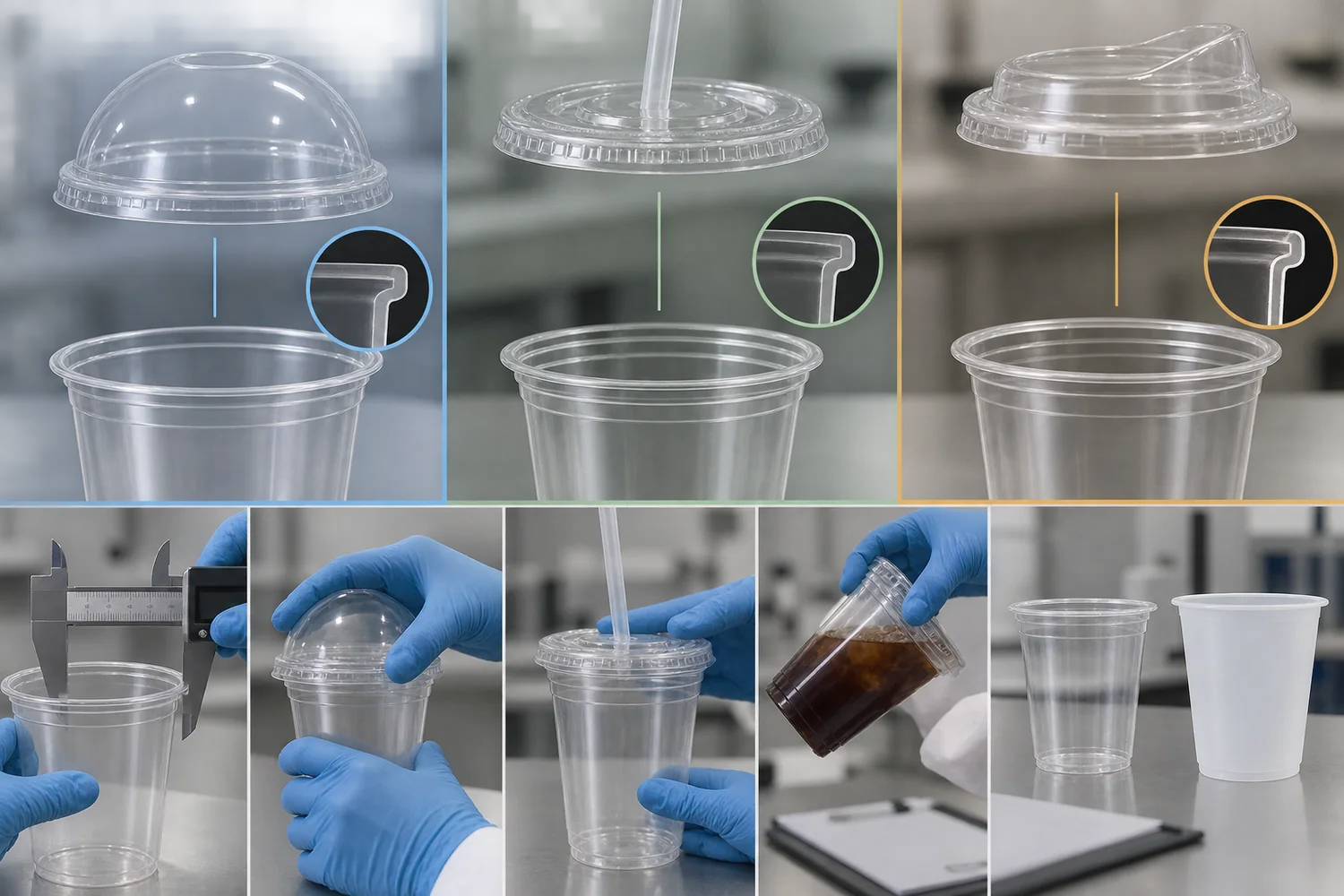
Does a 98 mm lid fit every 98 mm cup? No. Diameter is a screening value, not final approval. Rim geometry, lid geometry, intended series and material construction can still differ. Cupschina's own quality-control guidance treats cup-and-lid compatibility as a complete packaging system: fit, retention, rim engagement and leakage-related checks may all be relevant depending on the order specification.
A request for “a lid for a 16 oz cup” is also incomplete because one nominal cup size can exist in more than one rim family. The 12 oz PET cup range and 16 oz PET cup range are useful examples of why the exact cup variant has to be selected before the lid decision can be closed.
Do not assume cross-material compatibility either. A PET cup and a PLA lid—or the reverse—should not be approved just because the stated diameter matches. Equally, they should not be rejected by material name alone. Use the supplier's exact compatibility data and physical samples for the selected cup and lid. The cup and lid compatibility guide covers that approval logic in detail.
Real Store Risk: Similar Lids, Different Rims
Clear lids from 95 mm and 98 mm families can look similar when stacked at a busy counter, but visual similarity does not make them interchangeable. If both rim families are not necessary, remove one during cup-system planning. If both are necessary, separate their storage and item identification so staff are not relying on visual guesswork during service.
Build a Lid System Across 2–3 Core Cup Sizes
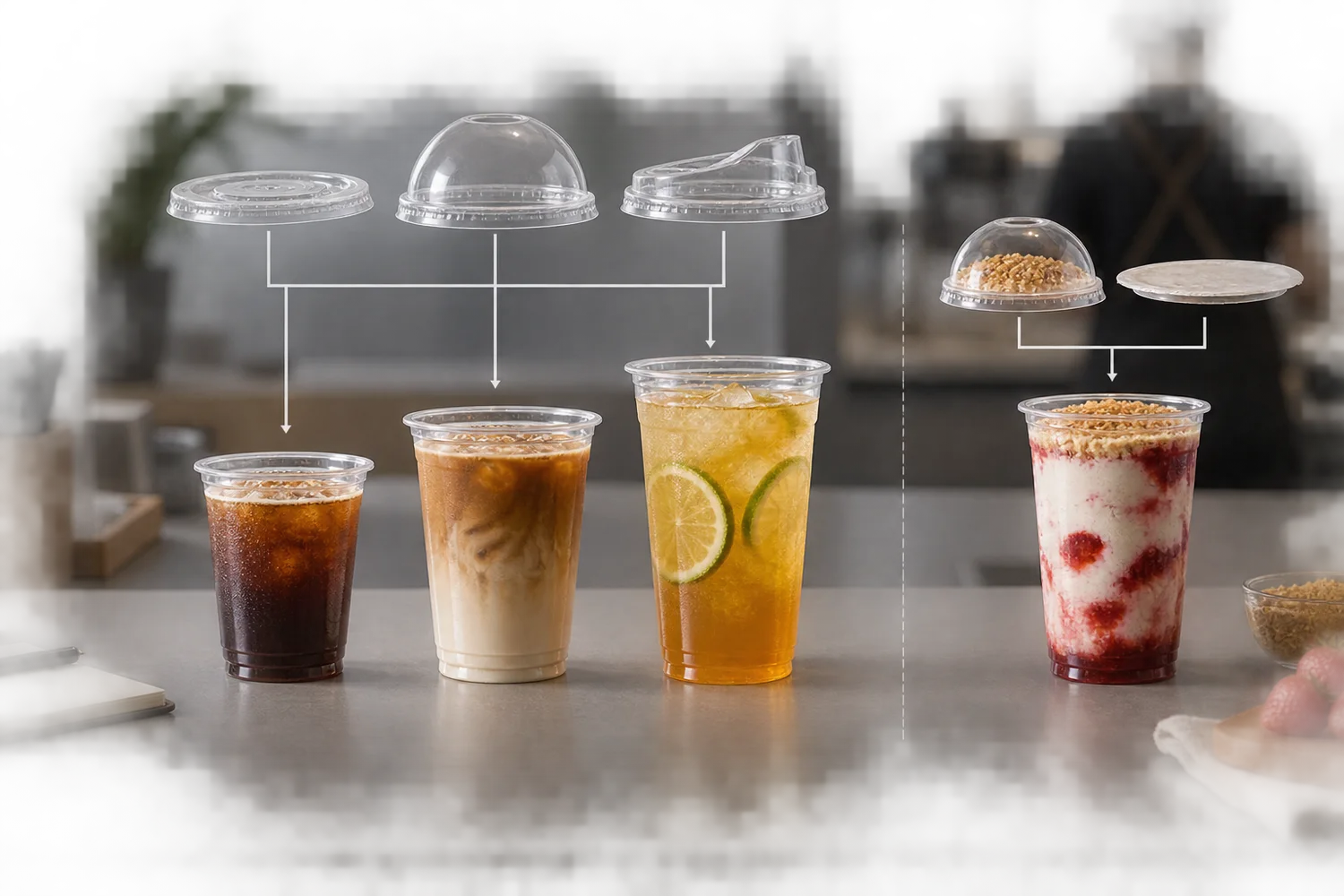
For a beverage shop or chain, lid selection becomes an inventory problem as soon as every cup size is chosen independently. Three cup sizes on three rim families can create several flat, dome and direct-drink lid SKUs. A complex menu may justify that structure, but it should be a deliberate decision rather than a side effect of choosing cups one by one.
One practical route is to choose the two or three core cup sizes first, then shortlist exact SKUs that can remain inside one primary rim family where the product range allows it. Selected variants in the 12 oz, 16 oz and 24 oz PET cup families can be evaluated around 90 mm, 95 mm or 98 mm rim candidates. That creates a shared-rim shortlist; it does not prove that every selected cup uses the same flat, dome or sip lid.
- Map the menu. Separate standard liquid drinks from those needing extra top clearance, unusual access or sealing film.
- Choose the core cup sizes. Keep the range small enough for practical store operation.
- Shortlist a primary rim family. Compare exact cup SKUs, not ounce labels.
- Verify the lid series. Confirm which flat, dome or direct-drink lids are actually approved for those exact cups.
- Keep justified exceptions. Do not eliminate a special lid if the drink genuinely needs different clearance, access or sealing.
The cold drink shop cup-system guide applies the same principle at store level. Standardization should remove unnecessary duplication; it should not remove a required function.
Approve Fit, Retention and Real Store Handling
A lid that snaps onto an empty cup has passed a fit check, not a complete delivery-performance test. Buyers should distinguish three questions. Fit asks whether the lid applies correctly to the rim. Retention asks whether it stays engaged during normal handling. Leakage or spill performance asks how the finished package behaves under the buyer's defined movement, tilt or transport conditions.
These checks should use the actual beverage setup where it matters. Dome lids deserve a finished-height check in the carrier and bag. Direct-drink lids should be reviewed with the intended beverage flow, ice and any available closure feature. Straw-opening lids should be checked with the actual straw and toppings. If leakage resistance matters commercially, define the handling test rather than describing an untested lid as “leakproof.”
Sealing Film Is a Different Closure System
Heat-sealing film should not be treated as another snap-on lid type. A rim that accepts a snap lid is not automatically an approved heat-sealing surface. Film sealing depends on the exact cup and sealing-surface geometry, film construction, machine holder or mold and operating settings. Approve the cup, film and machine setup together instead of applying a tolerance or sealing assumption from another product family.
Buyer Checklist
- Define the finished drink and how the customer will access it.
- Confirm whether the drink needs space above the rim.
- Select the required closure function: flat, dome, direct-drink, straw-opening or sealing film.
- Record the exact cup SKU, rim family and intended lid series.
- Approve physical fit and retention with the selected cup and lid samples.
- Test the filled cup in the actual carrier, bag or delivery setup where relevant.
- Validate the straw, stopper, tab, slider or sealing system only when that feature is actually specified.
- Freeze the approved cup SKU and lid code for repeat orders.
Final Recommendation
Start with the finished drink. Use a flat lid when extra top clearance is unnecessary, consider a dome when toppings or foam need space above the rim, and choose direct-drink or straw-opening designs according to the intended drinking method. Treat sealing film as a separate system rather than another snap-lid option.
Then move from function to approval: exact cup SKU, rim family, lid series, physical fit, retention and the store's real handling conditions. For multi-size beverage programs, keep as many core cups as practical inside one verified rim architecture, but retain a special closure when the menu genuinely needs different access, clearance or sealing. The best lid program is the smallest set of justified cup-and-lid combinations that has actually been verified for the selected beverage and operating system.
Frequently Asked Questions
What is the difference between a flat lid and a dome lid?
A flat lid keeps the closure close to the cup rim and suits drinks that do not need extra top clearance. A dome lid creates additional space above the rim for foam, cream or toppings. The correct choice still depends on the exact cup and compatible lid series.
Can different cup sizes use the same lid?
Yes, when the exact selected cup SKUs share a verified rim family and the same approved lid series. Nominal oz size does not determine that relationship, so the lid should be confirmed against each selected cup before standardization.
Does a 98 mm lid fit every 98 mm plastic cup?
No. Diameter is a screening value. Rim geometry, lid geometry, intended product series and material construction can differ, so the exact cup-and-lid combination still needs supplier verification and physical sample approval.
Which lid is best for iced coffee, juice or bubble tea?
There is no universal lid for each beverage name. Mostly-liquid drinks may use flat or direct-drink lids, while cream tops, fruit pieces or larger toppings can change the required clearance and access. Define the finished drink first, then verify the exact cup-and-lid fit.
Is sealing film the same as a plastic cup lid?
No. Sealing film is a separate closure system. The exact cup, sealing surface, film and sealing-machine setup need to be validated together. A cup that accepts a snap-on lid should not automatically be assumed to work in a film-sealing program.