
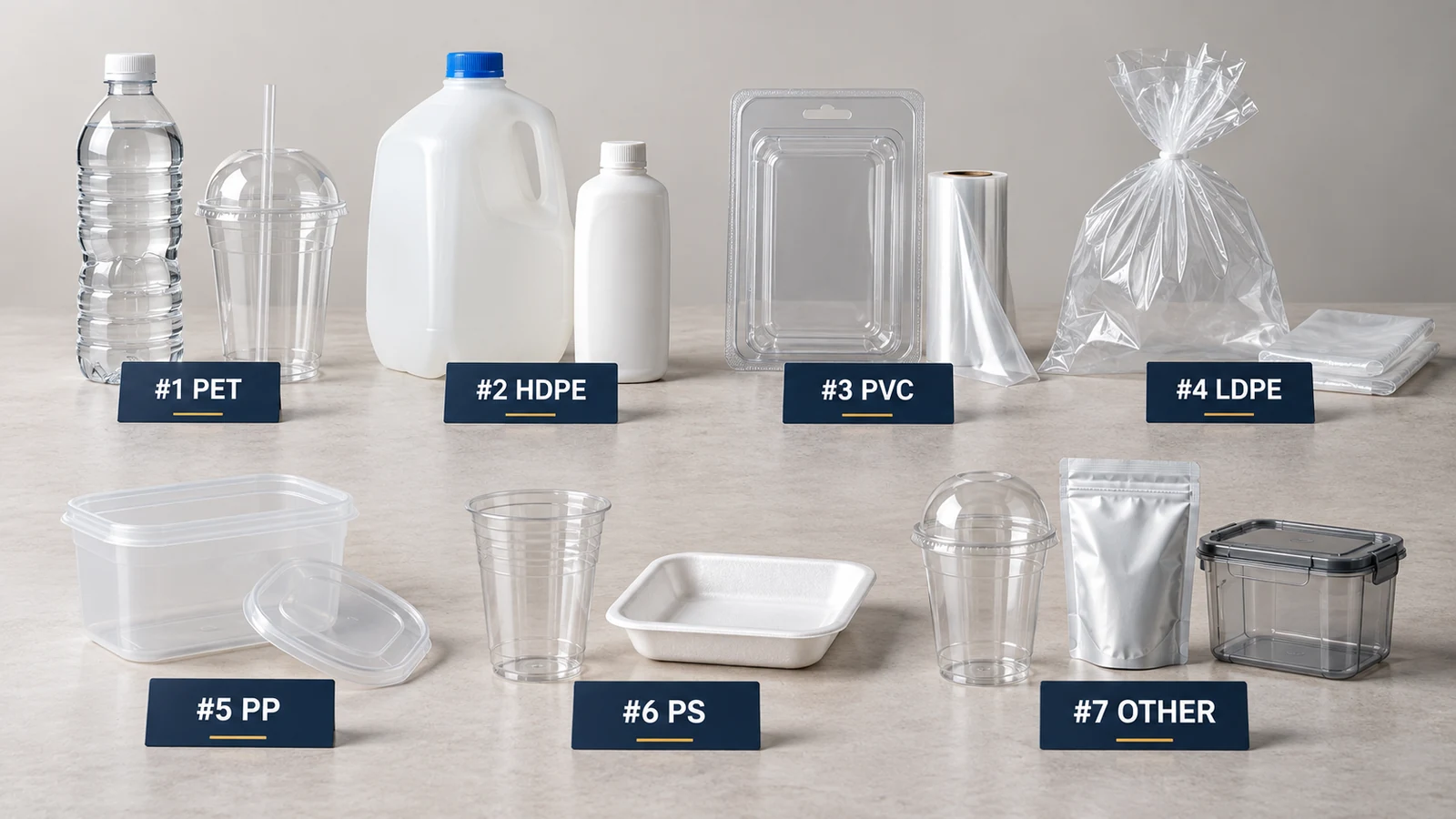
Quick Summary
- Resin Identification Codes 1–7 identify the plastic resin family used in an article; they do not guarantee that the item is collected, sortable or recyclable in a particular market.
- PET (#1) is common in clear beverage packaging, HDPE (#2) in rigid jugs and bottles, PVC (#3) in selected rigid and flexible packaging, and LDPE (#4) in flexible film and bags.
- PP (#5) is common in food containers, closures and cup lids, while PS (#6) includes both rigid polystyrene and expanded or foamed polystyrene packaging.
- #7 OTHER is a catch-all category, not a synonym for PLA: PLA can be one #7 example, alongside other polymers and some multi-resin constructions.
- Buyers should verify the exact article, full material construction, intended use, local collection rules and supporting compliance evidence instead of approving a claim from the number alone.
Plastic recycling numbers 1–7 are Resin Identification Codes (RICs), not seven recycling grades. The code identifies the resin family used in a manufactured plastic article. It does not by itself prove that the item is accepted by a local collection program, can be sorted in its actual shape and color, has a buyer for the recovered material, or satisfies a particular environmental claim.
That distinction matters to packaging buyers. A clear PET bottle, clear PET cold cup and black PET tray may share code #1 while moving through different collection and sorting routes. A PP cup and PP lid may both carry #5 yet still fail as a fitted system. Begin with material identification, then verify the complete article, intended use and destination infrastructure. The same discipline is explained in our PET recycling-claims guide for B2B buyers.
The Most Important Rule: The Number Is Not a Recycling Promise
ASTM D7611 states that RICs are used solely to identify plastic resin and are not “recycle codes.” A number inside a triangle may help an operator identify material, but it does not state that an effective collection and reprocessing system exists. Do not advertise #1 or #5 as automatically recyclable, #6 as automatically unrecyclable, or lower numbers as environmentally better.
Plastic Numbers 1–7: Quick Reference
| Code | Resin family | Typical packaging forms | What the code does not prove |
|---|---|---|---|
| #1 PET / PETE | Polyethylene terephthalate | Clear beverage bottles, cold cups, jars and trays | Local collection or recyclability of every PET format |
| #2 HDPE / PE-HD | High-density polyethylene | Milk jugs, detergent bottles and rigid molded containers | That every color, closure and package is accepted together |
| #3 PVC / V | Polyvinyl chloride | Selected blister packs, clamshells, bottles and flexible films | A universal safety or end-of-life conclusion |
| #4 LDPE / PE-LD | Low-density polyethylene | Bags, liners, shrink film and flexible packaging | Curbside acceptance of flexible film |
| #5 PP | Polypropylene | Food tubs, cups, closures, caps and cup lids | Heat suitability or universal cup-and-lid compatibility |
| #6 PS | Polystyrene | Rigid foodservice items plus expanded or foamed trays and containers | That all PS formats share one collection outcome |
| #7 OTHER | Other resins or qualifying combinations | Varies: examples may include PLA, polycarbonate and multi-resin packaging | That the article is PLA, compostable or one uniform material |
The table describes common examples, not a visual identification test. Transparency, stiffness and packaging shape can overlap across materials. Confirm the exact material statement, supplier specification and—where it is applied—the physical code on the production article.
#1 PET: Polyethylene Terephthalate
PET is clear, strong and lightweight, which is why code #1 frequently appears on water and soft-drink bottles, transparent food jars, thermoformed trays and clear cold-drink cups. Finished PET packaging often has a glossy, glass-like appearance, although color, wall texture, processing and multilayer construction can change what the buyer sees.
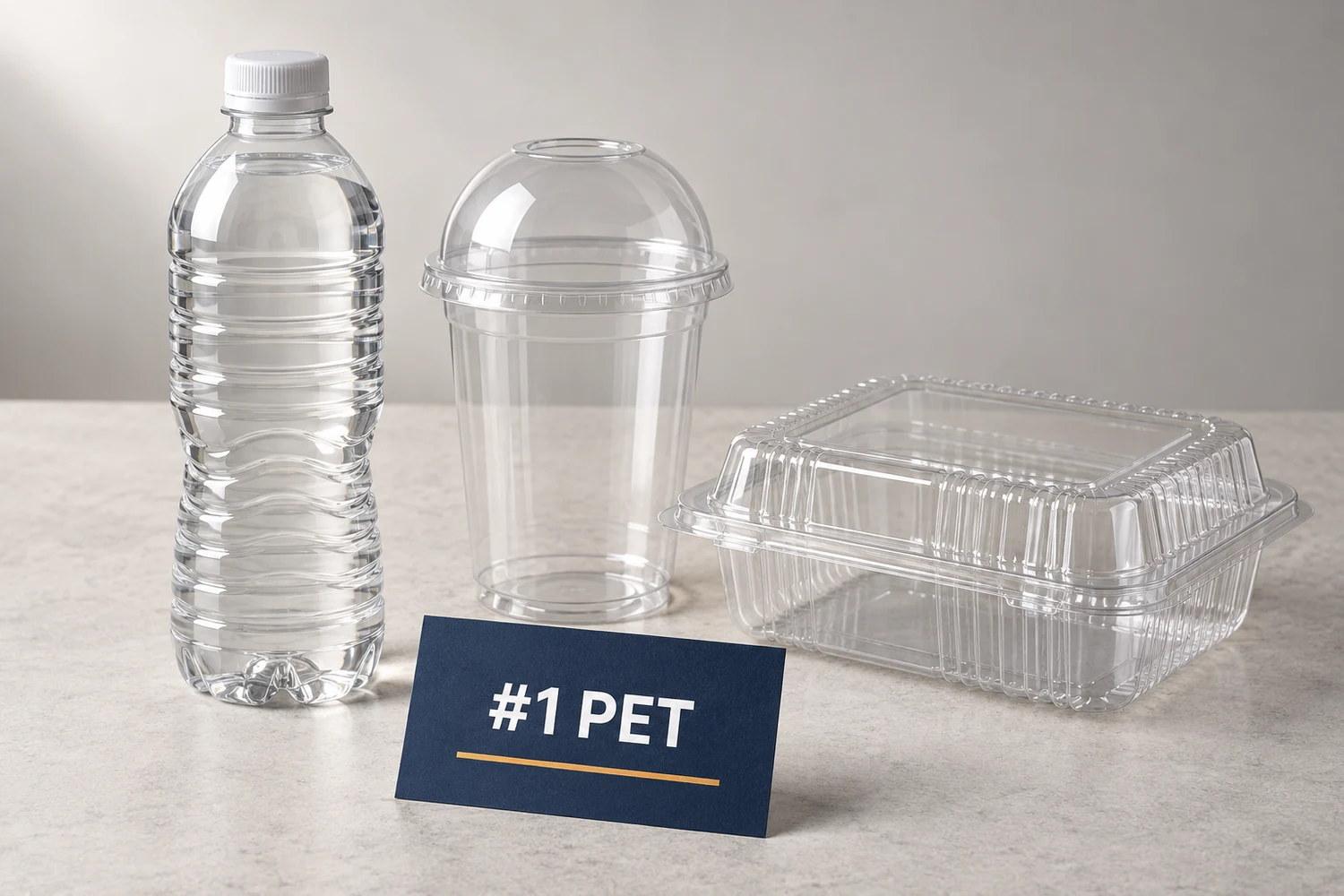
For cold-beverage programs, a clear PET cup can make drink color, ice and toppings easy to see. That commercial clarity is not a recycling claim. Buyers still need to check whether the destination program accepts thermoformed cups and trays as well as bottles, and whether sleeves, labels, inks, lids or residual contents affect the finished package.
#2 HDPE: High-Density Polyethylene
HDPE is a relatively stiff polyolefin widely used for blow-molded milk and water jugs, household-product bottles and other rigid containers. Natural, unpigmented HDPE often looks milky or translucent; pigmented grades can be fully opaque. An integrated handle, substantial neck and molded body are common visual cues in jug packaging, but they are not a substitute for material confirmation.
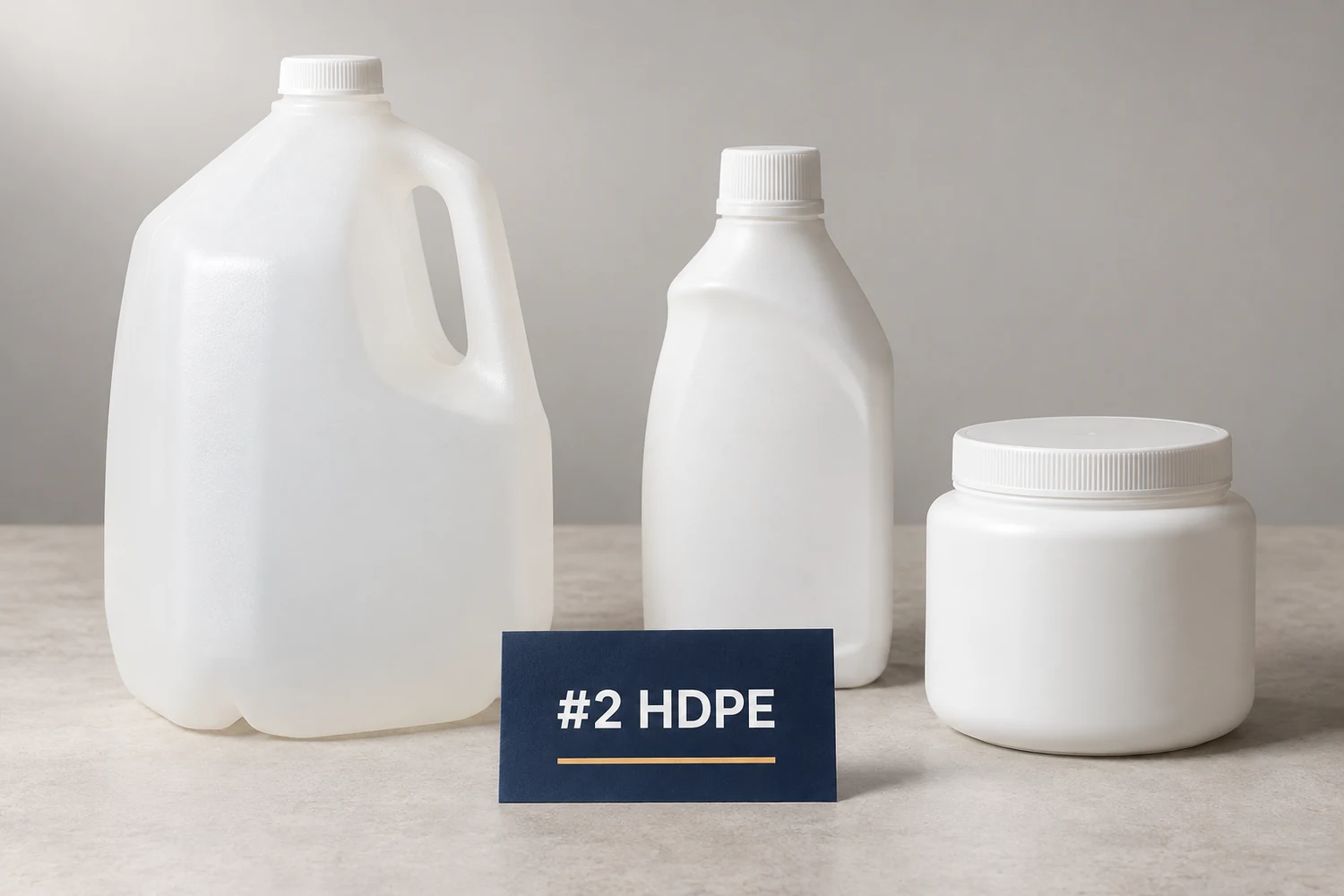
A bottle body and its closure may not use the same resin, so the buyer should record both components. The #2 mark also does not describe color sorting, label compatibility or the rules of a destination collection program. Treat “HDPE package” as the beginning of the specification, not the entire specification.
#3 PVC: Polyvinyl Chloride
PVC can be made in rigid or flexible forms. In packaging, documented applications include rigid blister packs and clamshells, selected clear bottles, shrink film and food wrap. That range is why a PVC packaging reference should show an actual formed package rather than using a pipe as the only visual example.
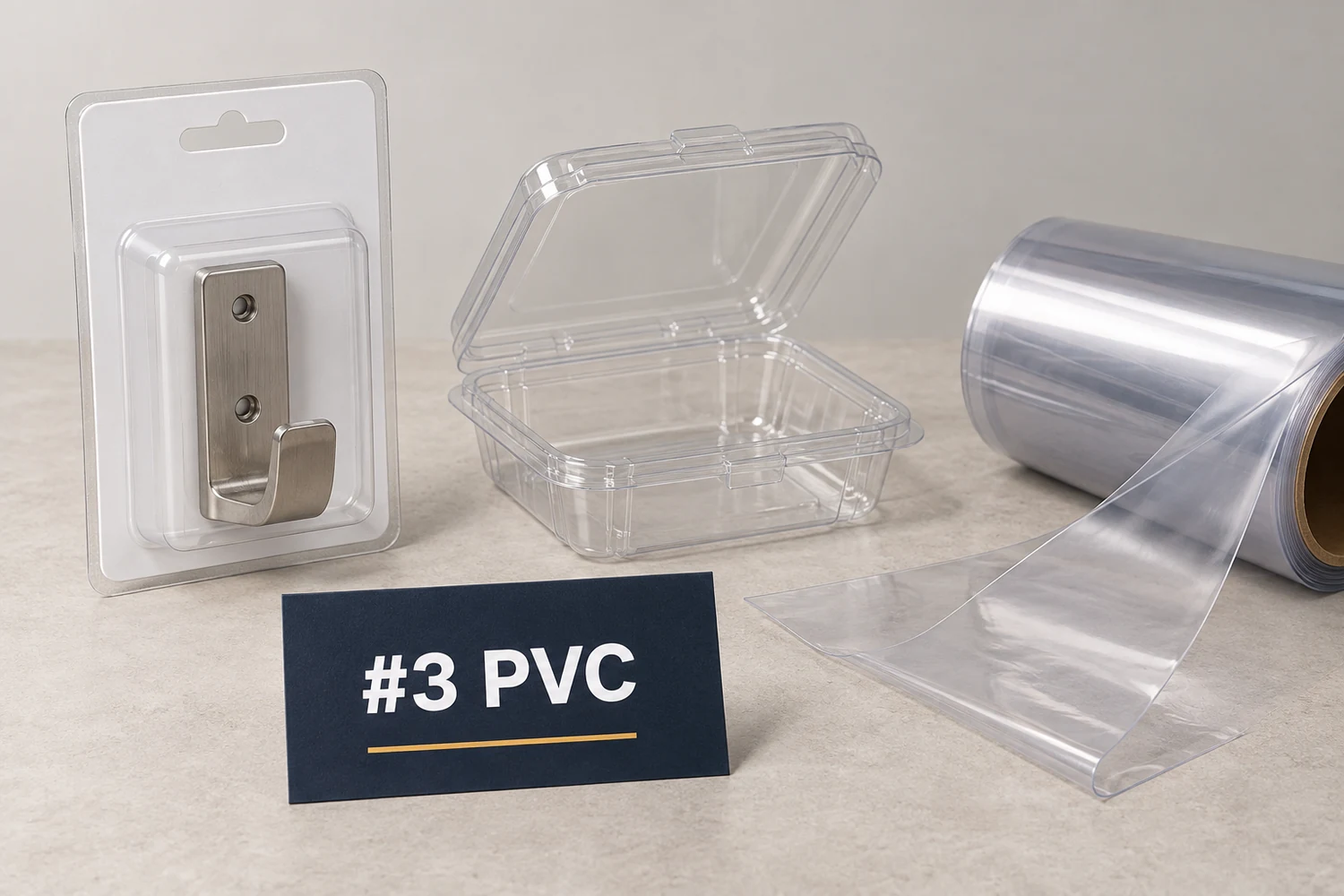
The number does not justify an absolute “safe,” “toxic,” “recyclable” or “not recyclable” statement. Food-contact suitability depends on the exact formulation, additives, construction and use conditions; collection outcomes depend on the market. When packaging will contact food, verify the full article through an article-specific food-contact document review.
#4 LDPE: Low-Density Polyethylene
LDPE is strongly associated with flexible packaging: produce and bread bags, liners, shrink film and other soft films. It can also appear in squeezable or flexible molded formats. For a practical visual distinction, think of thin film that folds, wrinkles and drapes—not a rigid transparent cold cup.
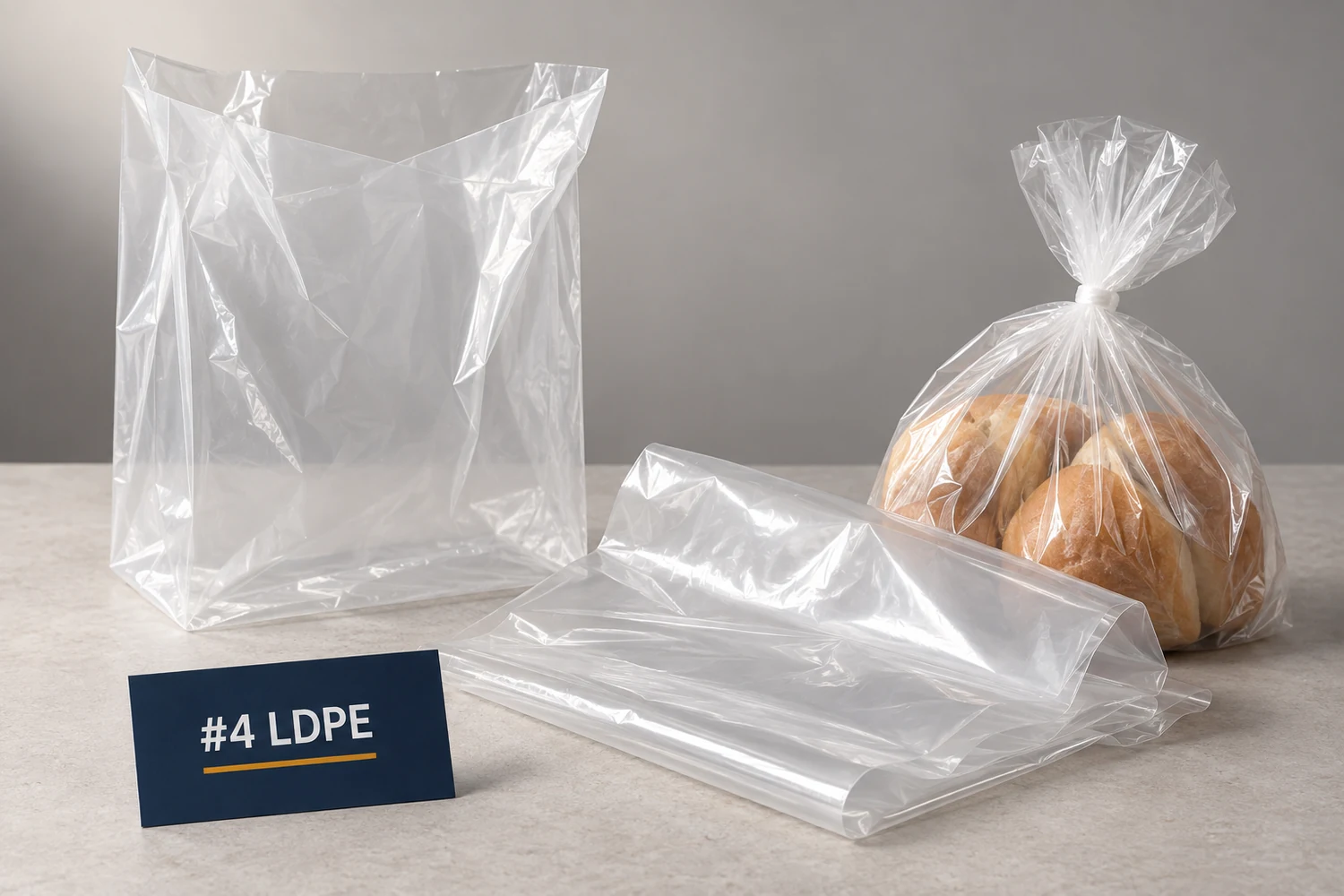
Flexible films can require a separate collection route from rigid containers. A #4 mark therefore does not mean that a bag belongs in a curbside bin. Buyers should check the actual film construction too: printing, adhesive, barrier layers and laminations can make “plastic film” more complex than a single LDPE layer.
#5 PP: Why Polypropylene Matters in Foodservice Packaging
PP is used in molded food tubs, takeaway containers, beverage cups, bottle caps, closures and cup lids. It may be transparent, translucent or colored depending on grade and processing. In foodservice, PP is often considered where a particular finished article offers a different balance of stiffness, flexibility and verified temperature performance from PET.
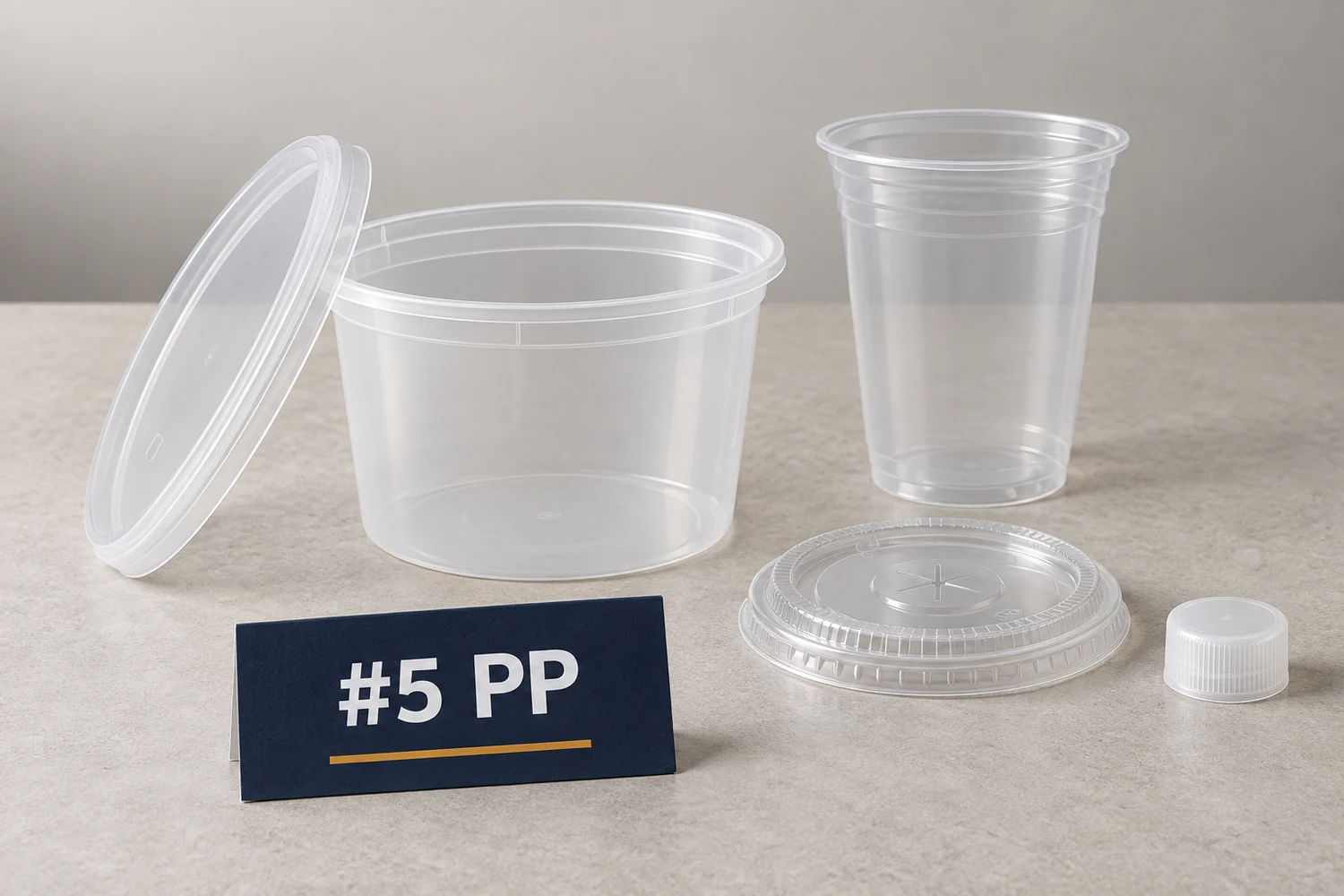
Two limits are especially important. First, #5 does not mean that every PP item is suitable for the same filling temperature, microwave condition or repeated-use program. Second, a PP lid is not compatible with every cup. Compare the selected product in the PET-versus-PP material guide, then verify the exact rim and lid using the plastic cup lid selection process.
#6 PS: Polystyrene
Code #6 covers polystyrene, including rigid PS packaging and expanded or foamed polystyrene applications. Rigid general-purpose PS can be clear, hard and relatively brittle; foamed PS is lightweight and often white. Foodservice examples can include rigid cups or trays as well as foam trays, cups and hinged containers.
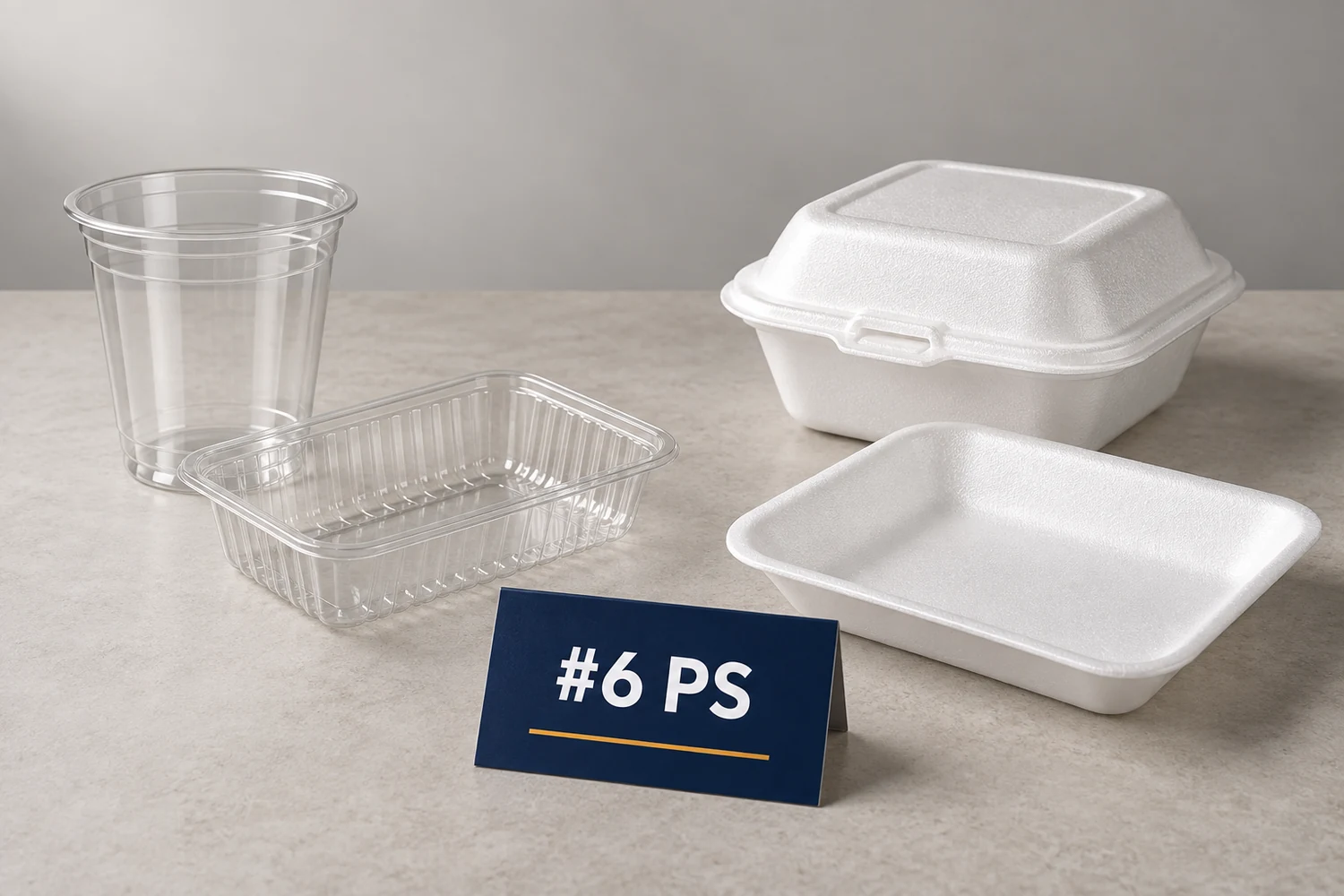
Because those formats have different density, shape and handling behavior, their practical collection outcomes can differ. The image and number should not be turned into a prohibition symbol or a universal “unrecyclable” claim. Check destination-specific rules and any applicable restrictions for the exact PS foodservice format.
#7 OTHER: Why It Does Not Mean PLA
#7 OTHER is not one polymer. It covers resins outside the six named families and, under commonly used guidance, can include products made from combinations that do not fit codes #1–#6. Examples may include polycarbonate, PLA, acrylics, nylon, ABS or multi-resin packaging, depending on the article and applicable marking system.
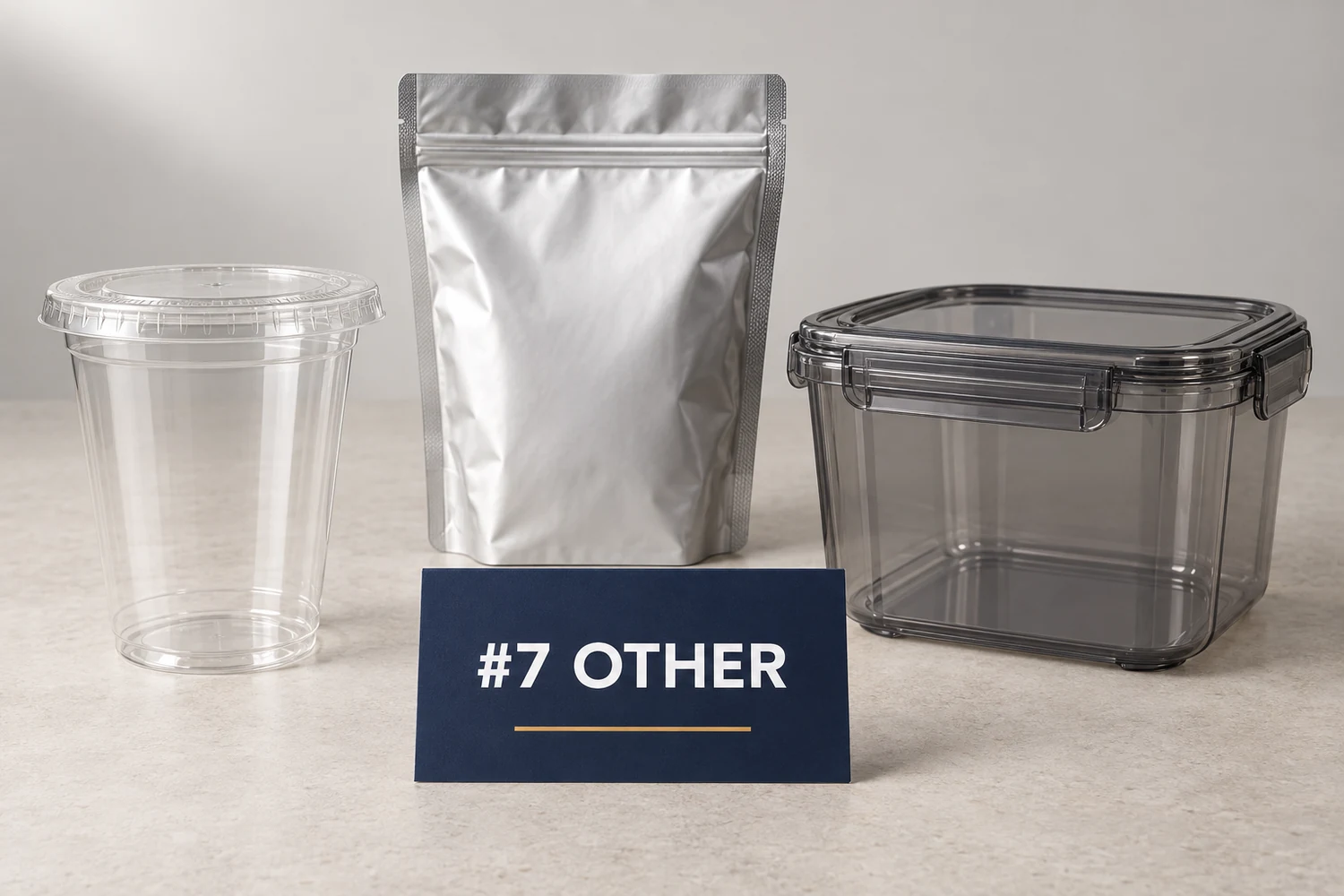
A buyer who sees #7 should ask for the specific resin or layer structure. If the supplier says the item is PLA, request the material specification and keep the identification claim separate from compostability. The PLA certification guide explains why compostable claims require their own evidence; the home-versus-industrial composting guide explains why the receiving environment must also be stated. A #7 mark alone proves neither.
How Packaging Buyers Should Use Resin Codes
Use the RIC as one field in a controlled specification. The complete decision still needs the commercial SKU, article format, dimensions, color, wall construction, lid or closure, label, print, intended conditions of use and destination-market requirements.
- Identify every component. Record the body, lid, liner, label and barrier layers rather than assigning one number to the complete pack by assumption.
- Confirm the production article. Compare the supplier statement and any physical marking with the approved sample; do not rely on a catalogue image.
- Separate three questions. Material identity, food-contact suitability and end-of-life acceptance require different evidence.
- Check the destination system. Confirm which formats, sizes and colors the local collector or program currently accepts.
- Control claims. Require support before using recyclable, recycled-content, biodegradable or compostable wording.
- Control changes. Require notification when resin, additive, color, layer structure, label, site or process changes.
For a custom drink-cup program, combine that material record with print approval, food-contact evidence and physical samples. The plain, printed and golden-sample workflow helps keep those decisions attached to the exact product. If the construction is unclear, request a product-specific review before the order is released.
Final Recommendation
Read plastic numbers 1–7 as a material-identification system: #1 PET, #2 HDPE, #3 PVC, #4 LDPE, #5 PP, #6 PS and #7 OTHER. Use the common package forms to understand what each family often looks like, but do not identify resin from appearance alone.
The defensible buyer conclusion is specific: this exact article uses this documented material construction, is suitable for these stated conditions, and follows these destination-specific collection or disposal instructions. A number can start that verification. It cannot finish it.
Frequently Asked Questions
Are plastic numbers 1–7 recycling grades?
No. They are Resin Identification Codes used to identify plastic resin families. The sequence is not a ranking of recyclability, safety or environmental performance, and the mark does not guarantee collection in a particular community.
Does #1 PET mean a package is always recyclable?
No. It identifies PET. Acceptance can still depend on article format, size, color, labels, contents, sorting equipment and local end markets. A bottle and thermoformed cup can have different outcomes even when both are PET.
Is #5 PP always suitable for hot food or drinks?
No. #5 identifies polypropylene, not the approved operating conditions of every finished PP article. Verify the exact formulation, geometry, filling temperature, contact time and supplier documentation for the selected product.
Does #7 OTHER mean PLA or compostable?
No. PLA can be one material within the broad #7 OTHER category, but #7 also covers other resins and qualifying combinations. Compostability requires separate material identification, certification scope and receiving-system evidence.
Can a buyer identify plastic only from clarity or flexibility?
No. Visual and flex characteristics are useful screening clues, but grades, additives, processing, thickness and geometry can overlap. Use the production mark where applicable and obtain an article-specific supplier material statement.
Official and Technical References
- ASTM D7611/D7611M — Standard Practice for Coding Plastic Manufactured Articles for Resin Identification
- U.S. EPA — About Plastic Products and Plastic Pollution
- U.S. EPA — What the symbols on plastic bottles and containers mean
- PET Resin Association — Consumer Guide to Plastic Resin Codes
- Vinyl Council of Australia — PVC packaging applications
Treat the number as material identification, not an environmental verdict
- Read the number and abbreviation together, then confirm that the mark applies to the main manufactured article rather than a label, coating or separate component.
- Do not convert
- Verify each component in a package because a cup, lid, label and barrier layer may use different materials.
- Treat
Buyer Checklist
- Record the exact resin or multi-material construction for the body, lid, label, liner and barrier layers.
- Photograph or document the actual material mark used on the approved production sample.
- Match the article shape, size and color to the destination program's current acceptance rules.
- Obtain food-contact documentation for the exact formulation and intended conditions of use where applicable.
- Verify lid fit and performance separately from the cup's resin number.
- Require evidence before using recyclable, recycled-content, compostable or biodegradable claims.
- Add supplier change notification for resin grade, additives, color, layers, label and manufacturing site.
Need the Material and Packaging System Verified Before Ordering?
Send Cupschina the destination market, exact cup and lid requirements, intended beverage, artwork and order volume. We can help organize the product specification, sample and document review.


